TheScientificTriangle
What about the environment and science
40 eco-friendly business ideas for students
Find effective eco-friendly business ideas for students here. Understand what can work best in your favor and why by knowing more about the benefits of being in this sector.
Eco-friendly business ideas for students are many, which means if you are one, you can start being a young entrepreneur right now. How you do it and what or why you start it will be important to know. Thus, with this blog, we will chalk down the major benefits of why beginning with eco-friendly business ideas for students can serve you well if you are still studying and exploring your best foot forward.
Their only way to save the world is to-
“Eat green, think green, do green, walk green, fake green, and sleep green.”
Only then, maybe, just maybe, there is a chance. To help these younglings, there is nothing much that I can do since I am not the whole world and I cannot fight it alone. What I can do instead is provide some aid to their thinking by helping them identify eco-friendly business ideas for students so that they can start doing and thinking green.
I am a social activist and cum artist, and the reason why I am able to leverage both segments together is the fact that I began early. When I was in college, I began a small business around selling worn clothes in good condition for $5. Every piece I would handpick, dry-clean, iron, and re-clean at a cost of $1 to $2. I would make $3 profit, and there were a lot of my college friends who grabbed clothes from me. Sometimes, when I wanted to do a giveaway, I ran a discounted price, and this way, in the four years of my college life, I made some friends who helped me become a dress designer. Now, I sell eco-friendly clothes and live my life in peace. I still don’t make a huge profit after 7 years of business, but I am happy with the way it’s taking shape and growing every single day.

Esther Rose
Benefits of doing green business
But, first, let’s discuss the benefits of doing green business to motivate even those kids who are still deep asleep within the comforts of their families. Rise up for your generations and also for the ones to come.
Jumping back to the benefits of doing green business, here are a few essential factors to be considered. Why should you do green business? Why not climb the normal ladders?
1. Increased investments from people and businesses
To understand how the sector is catching fire, you need to know these points:
- The investments have reached USD 16.50 billion (expected) by this year, 2023, and are expected to grow up to USD 61.92 billion by the year 2030. A CAGR of 20.8% is forecasted during this period, and it’s huge.
- $111 billion was raised by green tech companies alone in 2021 through different public markets.
- China is the biggest investor in green tech. Investments increased in the Middle East and North Africa by 16% and in the United States by 21%.
- Corporate investments have already reached $165 billion in 2021.
- Public markets have invested through IPOs, SPACs, and others in the $165 billion amount.
- Venture capital and private equity interests have contributed almost $53 billion.
Do you see the growth opportunities? If you want to start a business in the green sector, now is the time. Chances are, with growing efforts and an increase in awareness, the average man will contribute more towards green products in the coming years.
One of the key reasons why starting a green business very early can be a wise step ahead. Eco-friendly business ideas for students could propel college and school students in a direction that could lead to increased chances of growth and business related risk mitigation in the future.
2. New global legislations supporting green business expansion
Here is what every one of us must know if someone is interested in eco-friendly business ideas.
- Several laws are being put in place to protect the environment. Those industries that deal with green products need to prove in the EU that their products did not originate from any recently deforested land or wildfire-affected regions. In this way, strictness can prevent businesses from misusing goods.
- Consumer protection laws have also come up wherein definitive and reliable information needs to be given by businesses on their product labels. The product labels need to be detailed as per the new environmental labeling scheme.
| Global legislation | Reasons |
| Scope-3 emission law | Every business needs to now address the Scope 3 emissions to remain clear of environmental pollution mismanagement acts and laws. |
| Digital Product Passports | These passports will have details on the digital product’s environmental sustainability. These verifiable QR codes will likely pull back the greenwashed curtains. They will also act as an incentive for brands to improve the sustainability of their products and operations. |
| Decree-2022-748 AGEC (Anti-Waste for a Circular Economy Law) | According to this law, any business having more than 25000 products produced annually needs to declare to their consumers the following: Traceability Microfiber related information Recycled material incorporation |
| The New York Fashion Act | Clear reporting will be necessary in the following sectors; Greenhouse gas emissions Water use and plastic use Due diligence in supply chains GHG emission reductions Material production volume disclosure, like leather, cotton, and polyester |
| The German Supply Chain Due Diligence Act (LkSG) | Setting up corporate due diligence to promote sustainable corporate behavior. |
3. COP26-COP28 discussed milestones by member nations
It’s not just Article 6, but a lot of other essential implementations that will make a difference in the way trade and commerce were pursued earlier. If you want to start a green business, knowing this COP-26 to COP-28 summit details can change your understanding. Also, you can better approach a business and understand why a green business is what you must start. It is the need of the hour and is heavily backed by everyone. All you need is an idea in place.
| Laws | One-line details |
| Article 6.2 | Bilateral carbon to carbon trading |
| Article 6.4 | Centralized international carbon market |
| Article 6.8 | Non-market approaches |
4. Other benefits that add value to starting a green business
Read from this infographic slide why a green business or an eco-friendly business idea has more chances of success today.
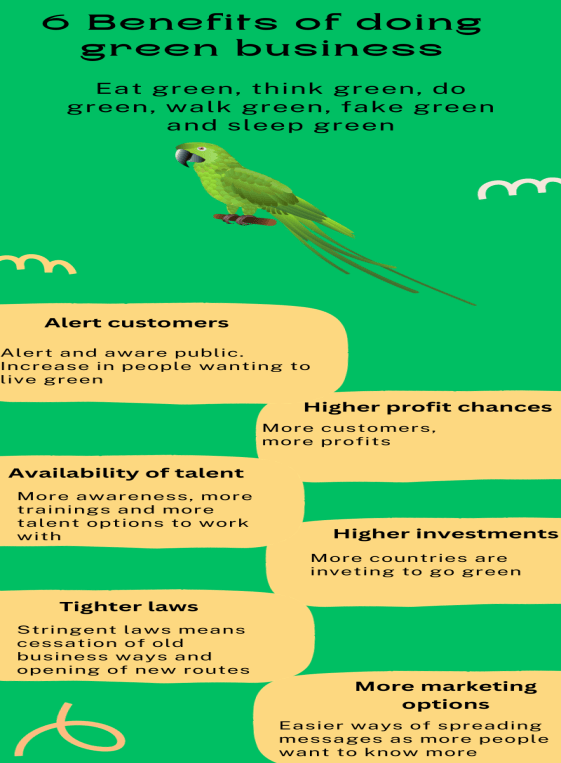
Next comes what you can do. If you by now know the benefits of doing an eco-friendly business are, and if you are a student, you might want to read further.
40 Eco-friendly business ideas for students
While you make your mind over the benefits, you can easily follow the next segment of ideas to understand which of these ideas can work best for you as a student. Here is everything you can know about eco-friendly business ideas being suggested, especially for school and college going kids.
Eco-friendly business ideas for students in the creative industry

You are getting ready to make the world a more creative place, and as you move towards your journey, a job today might help you better fortify your life. To do a job responsibly, you will need to understand how the market works. But it would be even better if you could align yourself as a creator with the evolution of the Earth and help mitigate its current problems. What can you become that can help you move yourself in this direction? Find out from the suggested job options below.
1. Reusable shopping bag business
Most states and places are banning plastic bags. If you want to do green business, you can grab this chance, and start collecting these, and start pouring your creativity forward. If you are a creative person and see the world differently, you could make a good business out of it.
2. Grow a nursery
It does not take a lot of space to grow plants. A terrace or a small, single-barren room can be enough. Start planting vegetables or flowers, and in that way, you can not only clean your home’s air but also earn a few bucks in no time. DIY (Do-It-Yourself) videos and a lot of other gardening resources can help you start with a very small amount of money.
3. Bookstores made of used books
If you have a lot of old books, you can open a small bookstore within the comforts of your home. You can also collect old books from bookstores selling used books and open a library. Try better: open a physical and digital library together. A small website citing used booklists and sending it across to people you know and slowly spreading the word.
Even try opening a consignment shop with Amazon.
4. Environmental Publications
Try something that can educate people about sustainability. A newspaper or a magazine would fit well, and you’d be contributing to people’s knowledge. Try it out as a business model if you think you have an artist in you.
5. Green Florist
Sustainable and organic floral arrangements are a craze now, and you could benefit from them. Create a green florist outlet and sell eco-friendly flowers and plants.
6. Environmental grant writer
Start writing proposals to draw in clients for your customers in the green market. Start by honing the skills of writing, and then move ahead with your experience in this direction.
If your clients want to welcome investors into their innovations, a good proposal is what will count. Without it, their services would not get their due. Find out the business scope, learn the skill, and start writing for your clients.
Eco-friendly business ideas for students in the technical industry

Technical students can gain a great deal from hands-on experience. As students divert themselves and take up different courses, there is a high chance that you can make some quick bucks out of the business model or that you might find a firm foothold in it for yourself.
1. Printer ink refill
Computer printer cartridges are a form of non-biodegradable waste. To reduce it and earn at the same time, you could begin a cartridge refill business. There are many places still where papers are being used, including homes and hospitals. Your business can thrive if you can find the right business outlets that cater to it.
2. Make eco-friendly paper bags
Start creating eco-friendly paper bags at home. You could start by collecting paper stocks that you can use for creating these bags. You can make them in your spare time and sell them through an online shop or through word-of-mouth.
3. Try developing green apps
Try creating green apps. An app that works to fulfill an environmentally friendly purpose is what would be called a green app. A vegetarian recipe app or a water bottle refill app is some examples.
4. Rent your bike or bicycle
If you have a bike or a bicycle and there are students around you in need, rent it to them. These rented vehicles can help your friend cover their distances without much hassle. Even if you have a car, you can rent that too.
5. Start a technology refurbishment business
Refurbish an old piece of technology and bring it back to life. You will have to work on its appearance and functioning. It does not require a great deal of investment, as you will only have to work with cheaper alternatives, but you also have to know ways in which you can turn them around.
6. Start installing solar panels
Solar panel installation would mean finding a job with an organization dealing with them. If you want to work in this direction of setting up a business for yourself, you might want to start dealing with them while you are still a student. Learn the business by taking up a solar panel installation job and finding out where you can fit yourself in its market.
Eco-friendly business ideas for students in the agricultural sector

In the agricultural sector, students are preparing to understand ways in which they can not only reap good harvests but also ways in which they can make the land more fertile. Several business opportunities exist for students who want to set up an eco-friendly business in this sector.
1. Begin a composting service
Compost is a rich fertilizer that people can create out of the waste they accumulate. Kitchen scraps, yard waste, and other such daily activity wastes can contribute to composting. The first point is to identify the place where you can start your composting business. Next, you will need to find out who can regularly give you their compost. Once you have identified a suitable client base, all you need to do is establish a composting business. An inexpensive way, it will not require much monetary input or time. Identify proper sellers who are ready to pay you decently for the good manure you take to them.
2. Do beekeeping
Honey is a worthy food, and many people all over the world use it every day in some way or another. You can have honey to counter your nutritional needs and also sell the wax to the cosmetics, pharmaceutical, polishing, and candle-making industries.
Beekeeping can be done from your home, and all you need is a secluded area where you can grow their colonies. Harvesting honey is a wonderful way to earn money. It is quite a lucrative business today and can be done with a minimum investment.
3. Start a green cleaning business
Do you know ways in which you can make your home green? By using natural ingredients, you can clean your surroundings efficiently. A lot of DIY videos are available on this front. If you are practicing these techniques at home, you can practice them outside as well. Turn your experiments into a full-time business and earn by cleaning places the green way, chemical-free.
4. Do a lawn mowing business
Lawn mowing is not a simple task but is something that cannot be attempted by every age group. If you know how to mow lawns, start extending your services to others, including your neighbors and surroundings. A lawn mowing business involves knowing how to use a lawn mower and also knowing various possible ways of mowing a space. Using designer ideas and making a good contribution to them works in your favor.
Identify old people’s homes or homes where people live busily with no time to mow their lands and offer your services to them.
5. Plant delivery service
Delivering plants is unlike delivering other goods and even different from fragile good delivery. If you want to do a green business, you can start transporting plants within the city or even outside the perimeters of the city and you’ll have a flourishing business in a few years.
6. Become a vendor for the farmers
Contact organizers and start talking to real-time vendors. Find work under them to learn the work, and once you do, you can establish a vending business yourself for the farmers. Understand what would make a farmer come to you, learn different ways of being better than other vendors, start something unique, and avoid competition with others by all means to grow.
7. Be in the green pest control
Controlling pests does not come easily, and people often end up using harmful chemicals to kill them, harming plants, animals, humans, and the environment. People can suffer from different health hazards if they ingest or inhale chemical pesticides, and so can animals.
If you have learned the art of green pest control, you can start a business out of it by talking to different people around you. Do pest control in a green way that does not harm plants, humans, animals, or the environment.
Eco-friendly business ideas for students in the fashion sector

Image Credit: LivaFluidFashion
The fashion industry is recently at the center of attention, and governments understand the weight of their carbon emissions. Thus, if you are training to become a fashion designer, you might want to go through the list of businesses to find out what you could do best as a student? You’d do it not just to earn money but also to manifest the needs of the environment, which is to go green.
1. Open a green salon
Those who love to dress others often open their own creative salons. If you are thinking of opening one, try a green salon where whatever you use should come from the green world. Use the least toxic products and sell more organic and home-grown products. Help people establish the benefits of going green and educate them on the benefits. Also, experiment on ways that can improve customer satisfaction with these products.
2. Create or sell organic beauty products
Make beauty products out of organic material. Using a lot of aloe vera, and plant materials can make you a green person. Start creating green products by growing the raw materials in your backyard or any other such place.
Start selling locally, and then expand worldwide through your brand. In this way, you can contribute to the decline of the use of harmful chemicals and help preserve men and women better.
3. Create eco-friendly dresses
Merino wool, hemp, organically produced cotton, and bamboo are some of the options you could try for creating eco-friendly dresses. Even recycled polyester, nylon, and synthetic materials can be used for them.
Start with a single dress and spreading your business ahead could be a good start. Plan small and spread wide if you think dress-making is your calling.
4. Open a second-hand clothing storefront from the house
You could work towards sustainability by introducing second-hand clothing stores from home. Start a small outlet where you resell used clothes that are in good condition. After thorough cleaning, you can put a price tag that’s cheap. Using these techniques, you will not only be able to earn money but also add to sustainability by cycling sustainable living out of it.
5. Sell eco-friendly dresses
If you are not a dressmaker, you could be a dress seller. Selling eco-friendly dresses could help people making eco-friendly dresses expand their seller’s worth. At the same time, you get to start a green business for yourself.
6. Custom-crafted clothing business
Customize your business by crafting clothing for people as per their needs from eco-friendly materials. In this way, you’d do something unique for your area and circle. The customized clothing business can not only minimize clothing demands but also give you a fresh way to create something for yourself while you are studying. You have to introduce yourself to the supply chain and the market and start learning about the business while you study.
Eco-friendly business ideas for students in the business sector
1. Try sustainable travel
Start a business whereby you take care of your city by preventing harm from unnecessary garbage. Most places where tourists arrive every year complain of increased garbage after the end of the tourist season. While you take care of tourists, preventing them from contributing to your city’s garbage bins, you spread and make this positive difference in a way that is deemed fit for you. Sustainable travel is a part of the tourism industry and is a fast-spreading concept.
Try it and learn to grow it while the world struggles to improve the environment.
2. Become a bicycle tour guide
A bicycle tour guide means spreading less pollution. Shun the huge vehicles and take up a bicycle. Show your city slowly to tourists and travel light without spreading air pollution. Enthusiastic tourists can make a huge difference to your business.
3. Start an energy auditing business
Become an energy auditor!
Determine the energy efficiency of your building and find ways in which it could use less energy for the same job. With an audit, you can understand the electricity consumption of your building and also drive the energy efficiency assessment. In this way, you can find alternate ways to cover your energy needs, thereby saving electricity consumption from your end.
4. Become an urban garden planner
Garden planning is not easy when there is less space and a lot in mind. Urban homes love to have a plush garden but do not have the space to create it. Take up such a responsibility and start creating gardens, and work towards their planning by becoming an urban garden planner.
5. Minimalist consultant and training
How to live minimally is a lost art, and amid all the extravagance, people have forgotten the whole idea of being a minimalist. Train people to become minimalists and tell them or guide them to adopt the approach.
You could really do well with people if you knew how to switch people from using complicated equipment to simple ones. Life is not about what you wear, but what you do with what you wear. How you live matters, not what you live with.
6. Herbal health treatments
Start herbal health treatment salons, spas, or simply begin one from the comforts of your two-room flat. It is by using some simple ingredients that you can satisfy people the same way they get satisfied with toxic chemicals and harmful ingredients. Try it your way and spread the word about your business. Also, try to harvest your own supply.
Eco-friendly business ideas for students in the legal sector

Are you training to become a lawyer? Start by becoming a green advocate or an environmental lawyer.
1. Become a green advocate and educator
Spread awareness about the laws and legal dealings available around the world. If you understand it better, you might be the right person to make others understand what it could be to safeguard what we are left with in this world.
2. Start by becoming an environmental lawyer
Start by taking up cases that deal with the green world and its constant decline. If you could protect even an acre of land from being destroyed, you might live peacefully thereafter, knowing that you made a contribution towards the needs of the current world.
Eco-friendly business ideas for students in the interior decoration sector

The interior decoration industry uses a lot of products that are responsible for polluting the industry. Metal waste and plastic waste also contribute to this industry. Start by making suitable changes in the industry, and the only way to do it is by starting a business in this sector.
1. Furniture recycling
Start by reselling recycled furniture. You can mend them for a small fee and sell them off to people at a price that suits a particular market. Understand what kind of furniture people love using, and also understand the market you wish to cater to.
For example, people living in vans would want to have lightweight furniture, and people living in plush homes might want to have heavy and gaudy furniture sets.
2. Duct cleaning
Cleaning again is an art, and cleaning dirt can make you a good amount of money. If you are not allergic or don’t have a disease, you can try to take up duct cleaning in houses where there is no one to clean them well.
3. Sustainable toys
Making sustainable toys is a way to move ahead. Try selling sustainable toys to the world by creating them at a very low price and by selling them to people who understand the meaning of going green. If you know where to place a toy in one’s home, you could locate a business where you make toys and guide people with their placement in homes.
Sustainable toys come from natural materials, and many small-scale industries are already functioning in this direction. Find out more about the way the industry works and go ahead with it.
4. Green building
If you know where to place a plant and have a good knowledge of them, start assisting civil engineers and contractors with your skills. A green building is a way to use more plants in the building so that the building itself can generate the amount of oxygen needed by the inmates of that building. In this way, a building becomes a green building or a self-sufficient support system.
5. Tiny home builder
Start by building tiny homes and planning around them. You can always create beautiful homes and help people live happily, even by going small. The use of less space and resources is the main motif behind delivering such tiny homes. Built at a lower cost, these buildings can also be used for different purposes. Oxygen and electricity generation are places of improvement where you can pitch in, thereby reducing their dependency on outside resources and making them more fuel efficient.
6. Wood worker
If you have an idea about woodworking, you could take it up and make a business of it. People are innovating every day, and you could contribute by reducing the need for wood and also producing materials that help replace the use of wood in the world.
You could actually show people ways in which they could go green easily.
7. Sustainable architect
The use of sustainable products to create and design a home is what civil engineers and architects aim for. Using less wood, steel, and concrete and yet creating durable structures is a work of art and imagination. Try finding the best ways to become a sustainable architect, contributing to this industry in different ways.
FAQs (Frequently Asked Questions)/Eco-friendly business ideas for students
What are some DIY business ideas for students?
Try the toy-making world or add spice to your life by selling new and different kinds of plants. You could try making money by creating organic cleaning agents and beauty products.
What is the best business idea for students?
The best business idea for a student depends on their knack and interest. Depending on what they prefer becoming, one could choose accordingly.
How do I start an eco-friendly business?
Plan a space, invest less, and call all your friends to help you with it. It is only a matter of time before you start your own business.
How should a student be environmentally conscious?
By practicing eco-friendly goals and developing habits that soothe or nourish the environment, Also, by generating habits that at least do not harm it in any way; a student could work towards eco-friendliness.
Conclusion: Eco-friendly business ideas for students
An eco-friendly business idea would mean making the world more eco-friendly. If you can do it, you are running one. Start contributing to the environment. Stop and think about whether your activities are harming the environment in any way. Find out what works for the environment and what doesn’t. Become more aware. Start running a business or any business with some environmental goals, and you’ll be amazed at how much change you could contribute to the world. Above all, live consciously and make your choices consciously.
Subscribe to our blog and share our post!
Link to more sustainable blogs here.
How Does Sun Exposure Affect Skin?

The effects of sunlight on the human body are both positive and negative. Sun exposure effects on the skin, for example, are well known to cause skin burns and increase the risk of cancer in the long run; however, sun exposure is also required for synthesizing Vitamin D in the skin. As a result, an optimal balance between healthy sun exposure and dangerous overexposure is required.
When the sun shines down on us, it can do us good or harm, depending on how we react to its rays. You may have heard of these as UV rays or ultraviolet.
The most common type of sun exposure is UVA rays.
UVB rays are less prevalent in the sun but more intense. UVC rays are the most dangerous. Fortunately, we are not exposed to UVC rays.
UV rays can penetrate your skin even if you can’t see them. In the skin, the epidermis is the outermost layer. Various nerves and blood arteries are located in the dermis. The cells of the epidermis contain the pigment melanin. People with lighter skin tones are more susceptible to sunburn because of this.
Melanin protects our skin while producing vitamin D. Your skin tans or darkens as your body defends itself against UV rays. UV rays can penetrate your inner skin layers if you spend too much time in the sun. This is referred to as sunburn. This can result in skin cells dying, being damaged, or developing cancer.
Sunburn symptoms include:
Redness.
Because of the increased blood flow, sun exposure affects the skin i.e. your skin will turn red. It can happen immediately or gradually. You may not realize you’ve been burned until you return inside.
Hot skin. You may also experience goosebumps or chills.
- Pain.
- Skin that is itchy or tight.
- Blisters.
- Dehydration.
- Peeling.
What are the benefits of sun exposure?
Sun exposure has both advantages and disadvantages.
Minimum UV rays are beneficial to us as it produces vitamin D, which aids in calcium absorption. Calcium is required by the body to build and maintain healthy bones. If you have low vitamin D levels, your doctor may advise you to take a supplement.
According to the World Health Organization (WHO), UV rays can aid in treating certain health conditions. Doctors may recommend it to individuals suffering from eczema, psoriasis, rickets, or jaundice. UV rays can also be used to disinfect and sterilize.
Excessive sun exposure can be harmful. It may result in the following:
Sun exposure affects the skin, and it starts to change. Melanin-containing skin cells can clump together. This results in freckles and moles. These can develop cancer over time.
Early ageing.
Sun exposure affects the skin to age faster than usual. Wrinkled, tight, or leathery skin, as well as dark spots, are symptoms.
Immune system suppression.
The body relies on white blood cells to fight against infections. New skin cells are formed with the help of white blood cells after the skin is burned. In other ways, this can weaken your immune system.
Eye injuries.
UV rays can cause tissue damage in your eyes. They can burn your outer layer, known as the cornea. They can also cause blurred vision. Cataracts can develop over time. If not treated earlier, this can result in blindness.
Skin cancer.
Most cases of skin cancer are not malignant melanomas. Although exceedingly frequent, it can be effectively treated. Melanoma is a more dangerous form of skin cancer that is much less frequent—leaving skin cancer untreated increases the risk of it spreading to other body parts.
Sun exposure can harm anyone.
It makes no difference how old you are or your skin colour. The length and depth of your exposure increase your risk. If you have fair skin or moles, you are more affected. A family history of skin cancer is also a consideration. Farmers, construction workers, and fishermen require additional safeguards.
The Way to Better Health
You can avoid the negative sun exposure effects on the skin. Follow the Food and Drug Administration’s tried-and-true guidelines (FDA).
Apply sunscreen.
The FDA recommends SPF 15 or higher. Broad-spectrum sunscreen blocks UVA and UVB. 30 minutes before heading outside, apply sunscreen. Don’t forget your ears, lips, and hairline. Each hour, reapply sunscreen. After swimming or sweating, reapply.
Make a plan for your exposure.
Between 10 a.m. and 4 p.m., avoid direct sunlight. Take extra precautions in areas closer to the equator.
Take frequent breaks. Excessive sun exposure affects the skin and is harmful. Enter the house, seek shade, or use an umbrella.
Protect yourself.
Protect your skin from UV rays by wearing clothing and hats. This is especially important for babies and children, who are more sensitive. You should also wear UV-blocking sunglasses.
Other considerations should be made when it comes to sun exposure. Some medications can increase your sensitivity to the sun’s UV rays. Antibiotics and birth control pills are examples.
UV rays reflect off surfaces like water, concrete, sand, and snow. You are more vulnerable in these areas. This means that sunburn can occur while skiing. When it is cloudy outside, you can also get sunburned.
Frequently Asked Questions:
Can skin recover from sun damage?
“Sun damage is reversible to some extent, but you can’t completely undo the changes to your skin,” Dr Littler says. Topical retinoids can help improve the appearance of surface wrinkles, fine lines and dark spots.
What age does sun damage start?
Signs of photoaging usually begin in your teens to early 20s. Signs include Spider veins (broken capillaries) on your nose, cheeks and neck. Also called telangiectasia.
The Cryptic Science of God, Evil, Energy Cycles and our Conscience
Our energies never die but merely change from one form to another.
Does it mean that Moksha is a lie?
Do we never get to reach the stage where we attain complete liberation?
But let me tell you this: neither is moksha a lie, nor are our energy cycle explanations.
But then, how do these two things exist in harmony?
For us to understand it, let us understand a bit about our actions.
An action is nothing but our karma. We know from science that every action has the ability to create an equal and opposite reaction.
Going by our previous understanding of Karma, we can say that due to time inversion in Kali Yuga, our good actions have bad possibilities and our bad actions have good possibilities.
If that is the case, then we can safely say that our actions, or karma, are our footprint—our energy footprint in the universe.
It also means that for many of our past lives, we have built ourselves upon the same cycles again and again.
This is what comes to us as expectations in this life.
What is the relationship of energy cycle and moksha?
To put it more clearly,
When you are doing good in your studies throughout your school in several previous cycles, you are constantly expected to repeat the same process even in this birth.
It is when people come up and tell you that you are doing well, but maybe you should focus more since you are supposed to do well in your studies.
If you ask them back why or how they think you should do well in your studies, like, fair enough, you will get an oblique or vague answer. Most often, I used to be more baffled by their answers than by people’s expectations.
But slowly, I realized, people would expect out of you what you had already achieved in your previous births.
Of course, we cannot compress vacuum but can use the process of compression or rarefaction when there is existing matter.
Matter is what can be compressed and ultimately matter is nothing but compressed energy, to put it in another way.
When people expect something from you, they are obviously reading your energy footprint from before.
That is when they feel you will behave in a certain way or respond to a certain cycle.
It is what creates that pressure on our shoulders, forcing us to fall prey to or behave in certain manners.
What is an energy cycle?
We all know that an energy cycle exists in three forms.
- An exothermic circle
- An endothermic circle
- A self-sustaining energy cycle whose net output or input of energy is zero.
Often, our society projects an exothermic circle as God.
An endothermic circle is evil.
Similarly, a self-sustaining cycle is something society rarely speaks about.
We all might have at some point in time experienced an inner voice—we call it our conscience or the voice of our soul.
This conscience is nothing but an impulse from a higher source that we are not aware of—something that is perfect and wants us to be there.
A self-sustaining cycle in action form would mean an action that leads to no consequences, good or bad, which means no energy leakage or absorption in any form.
This is how we are made to understand a self-sustaining cycle. That is when science says that a self-sustaining cycle is impossible to create, for every action has a consequence, at least one.
This is where we end the battle.
But what if the self-sustaining cycle is not what people think it to be?
What if a self-sustaining cycle is a form of energy cycle where the amount of energy given out is compensated by an influx of an equal amount of energy?
- The energy input and output could be such that the same energy molecules that ward off come back after a point. Like some energy molecules, they break off to do a task and then return post-release from that task.
- It could be that an energy output from the cycle is compensated by an equal amount of energy influx from some other source.
- It could also be that the bands of energy that go out and come in are both foreign. It means neither the energy that is coming in is ours nor the one that went out is ours, which means both were borrowed at a time difference of “t.”
Every action that becomes self-sustaining in the way described above will definitely be capable of performing better and optimally than the two other kinds of cyclical processes.
If all of us start listening to our conscience and work through the steps pointed out by our conscience, you will know that we will all break free of all previous cycles, which means all of us will be attaining moksha without breaking the laws of energy.
When it comes to life, which cycles need to be lost and which need to be kept?
Cycles are created and recreated—we eat in cycles, we sleep in cycles, we work in cycles—and those cycles that do not have a harmful consequence can surely be repeated.
According to the law of moksha, only those energy cycles need to be destroyed that have the possibility of going rogue. Calculating it is impossible at all times, but if you notice, within us, we have this innate tendency where a small voice constantly keeps warning us of harm that could come out of a situation. For now, if the science of conscience is to be analyzed, it could rest upon the fact that conscience is nothing but an impulse.
An impulse and the conscience
Most often the definition of conscience states that it is an impulse that function from previous experiences. How far these experiences circle the impulsive conscience is not known but if you closely observe your life, you will know that conscience travels more than the collective experience it gathers from your life and your surrounding lives. Sometimes, your conscience tells you of consequences you have not seen anybody around you experience and neither have you experienced it. Mere observations have led to great discoveries and discoveries show they date often before our current carbon imprint.
Sometimes, there is a supporting visual; at other times, there is no visual but just a pinch, a tug, or a pull somewhere.
The question is: how many cycles, when broken, can lead your soul to moksha?
The answer is that all those cycles that exist with a consequence in a direction opposite to their creative force need to be chopped down.
Liberation comes when people can break free of these noxious cycles automatically.
How do you do it?
Change the way you think.
To change the way you think, you don’t have to change the way you stay.
We all know that every day we are donning new job roles, new relationships, and new thinking effortlessly.
If I don’t care today, tomorrow I might want to care and see what happens.
When we see a movie, most of us call it good when we feel the pull of a character, as if beckoning us to become like them. For a while, we do believe in it, but then life comes in the way.
By staying where you are, you can change your thinking and could either become a monk, a knight, or an explorer and see life in an untangled form.
For example, let’s put it this way: if you are an explorer and you decide to dock somewhere, As you dock, some people come running and throw black ink on your face and body. How would you react? Would you respond in the same way you do normally? Completely alter the way you think and change your life—not here but within you.
Ideally the force that wants to keep the energy cycle on is Evil and the force that is trying to liberate us from this energy cycle is God.
No longer a giver or an exothermic energy cycle can then be called God and a taker or an endothermic energy cycle be called Evil.
Since the evil exists in telling man to continue this strife, this never-ending cycle of energy dissipation and absorption.
Read more here
Water Sustainability Initiatives- An Insight [2024]

Learn how sustainability initiatives can create harmony and bring back the balance we almost lost. What are sustainability initiatives, and why can they offer such immense help to us? Learn more from here.
Sustainability initiatives towards climate change would include saving the most essential resources for the future. Water, air, food, and sunlight maintain life and are some of the pillars to look at.
All in all, water is difficult to create, clean, or manage. Without clean water, surviving or thriving is truly not possible (it cannot be called impossible, which stands for I-m-possible).
Cleaning the air is easier than cleaning the water. Growing food in controlled conditions and keeping it clean is also possible. But cleaning and maintaining water is hard, very difficult.
If cleaning water bears a cost, creating more and more fresh water is also pricey; maintaining fresh water is the only way in that case. The only way to spend less on water is by keeping it in a fresh state. Sustainability initiatives around water conservation are thus not necessary; in fact, they are the only way to save lives and the planet.
To make sense of what can be done, we will go through the most essential points.
- How water was treasured and sustained across cultures.
- Sustainability initiatives to clean the water sources.
- Reasons why there is an increase in clean water stress around the world.
How water is treasured and sustained across cultures– story of sustainability initiatives in the starting
Apart from what we know of Ganga’s descent on Earth, Bhagirath, an Ikshvaku king, brought her down for several reasons. When King Sagar was conducting an Ashvamedh Yagya, Lord Indra, fearful of King Sagar, stole the horse and tied it at Kapil Muni’s ashram. The Ikshvaku King, King Sagar, sent all his sixty thousand sons and Asmanja, his other son, to search for the horse. When they found the horse tied in Kapil Muni’s ashram, they thought he stole the horse, and when they tried attacking him, he cursed them to death. One of the descendants of King Sagar came back to Kapil Muni to ask him how their souls could be quenched, and Kapil Muni suggested it could only be done by the water of the Ganges. Bhagirath, a descendant of King Sagar, could finally seek the permission of Lord Brahma to carry Ganges with him to Earth.
This story is the Kali Yuga version and is a symbolic representation of the real story.
1. A black horse symbolizes uncertainty and fear.
An Ashvamedh Yagna, where a horse is sacrificed, is done to gain power, dominance, or blessings. It is a ritual from the Black Yajur Veda that is banned from being practiced in Kali Yuga.
2. Kapil Muni represents knowledge, a man capable of lifting the veil from the doors of fear.
3. The disappearance of the sons when cursed by Kapil Muni shows an event.
4. Lord Indra represents the anger and the miscalculations wherein even Lord Indra could not get it right.
5. Moksha of the sons is through their service to us which is the mankind.
The reality of the story, which seems more like a fable, is known across the country.
In this story, it is told that King Sagar, with his sixty thousand sons, was assigned a mission to find water for the newly created Earth.
Kapil Muni was the scientist presiding over the project.
The king was investing his wealth and labor in creating water.
But after years of experimentation, even though they created huge volumes of water successfully, but a small error by these sixty thousand workers made the water undrinkable. Many stories revolve around how the seawater turned salty. You could choose to believe anything that suits your intellect.
Despite Kapil Muni’s expert instructions, they could not achieve success. A small mistake in their carrying out the experimentation turned the tide. The black horse is nothing but the fear in the hearts of these sixty thousand sons of King Sagar. On judgment day, it was decided that their deaths alone could restore balance to the huge problem that had been created. These sixty thousand sons of King Sagar were sacrificed, and it is often believed that they are the fish we keep eating. The souls still repeat in these fish, and how the soul system is distributed in the fish is different from how it is distributed in men. Sixty thousand souls are nothing but the sixty thousand clans of King Sagar whom we keep consuming, all thanks to the curse of Kapil Muni. Their path of liberation was paved through the human stomach.
Earth still stood without proper sources of drinking water in the northern parts, King Sagar sent one of his descendants to Kapil Muni for a solution, who was still experimenting. Even though he did not spare the lives of these 60000 sons, he did understand that others were in dire need of water. So, he finally gave them the solution. By then he had merged the experiments of his own with that of Lady Ganga. She was a disciple in Brahma Dev’s school. It was almost difficult to empty Earth of the oceans which were given to King Sagar (who wanted to stay back on Earth for his fallen sons to support lives here as it was his sons who got it wrong. He sent back his other sons and asked them to return to their kingdom while he stayed with his fallen sons back) by Kapil Muni for the lives of his sons. There was still another way and that was to bring water into the inlands of the landscapes. Kapil Muni took his experiments to Lady Ganga who was also experimenting on finding better water solutions for her haven. She learned from the greatest and finally could derive fresh, clean water for the haven. They both merged their findings and observations and invented the water of the Ganges. The water of Ganges that comes down to Earth is clean and has a microbial composition that does not allow the water to expire. It means people could store huge amounts of Ganges water in their homes to fulfill their needs. The ashrams located on the Ganges would store water for up to three months to pave the way through the harsh winter months and the monsoons when the ashrams were moved further inside to prevent flooding.
The roots of the Ganges were kept close to the haven and she was also supposed to play the role of a mirror of men’s souls on Earth.
Finally, Bhagirath was granted the project to pave the way for Ganges to descend. Ganga decided to create a small tributary of her water sending it down to Earth.
In all this, Lord Shiva comes into the picture, as he symbolizes the Himalayas and is still often found wandering there. The clan of Shiva does not leave the Himalayan territory ever and that is as far they come upon Earth.
Only the tough rocky terrain of Lord Shiva’s lands could hold her weight when she fell down from the Gaumukh glacier. It was a huge task for King Bhagirath, as it was not easy to carve such a way. There were several animal species that came forward and helped the mission. These animals were raised as beings before Kali Yuga, and when man took center stage, did they get transformed into creatures at the mercy of humans? But who knows if it is a test for this human clan and what lies ahead?
The story is old and from a time when humans lived differently. But it shows how water was brought to Earth. The sage from whom we learned the story said that if anybody could know the real story underlining Ganga’s descent, they would never dare dirty it, and neither would dirty their souls. Ideally, a mirror reflects all that we have become to someone who is interested in knowing—the Gods!
- Using pitchers
- Training people in ways they can use less water
- Knowing ways and using alternatives for water.
- Storing rainwater
- Developing fabrics that require less water for cleaning
- Using water capsules to quench thirst during long journeys reduces the water needs of the body.
Some of the earliest known ways in which water conservation and sustainability initiatives existed in our country.
Sustainability initiatives to clean the water sources
Thousands of such initiatives are underway, and governments are often trying to make them better for people. Sustainability initiatives taken across the world to clean up the waters include:
- Sustainability initiatives towards creating clean water sources would include stopping the use of water for as many activities as possible. If car cleaning, bike cleaning, floor cleaning, making waterless toilets, and washing clothes could be done without water, imagine the amount of water that could be saved!
- Creating effective dams, yet not too many as part of schemes for sustainability initiatives, could solve the problem of water for many while keeping the environment together.
- Using solar-powered desalination techniques could also be a decent way for countries that lack underground clean water sources- as part of sustainability initiatives.
- Sustainability initiatives would mean utilizing different water reuse technologies that could be another way of dealing with the problem. Reclaimed water could save people and resources equally. Using water in the right way would mean channeling the water towards creating the right kind of water opportunities. Filling water gaps could even be possible, and globalizing the water needs could also help or serve as a step towards creating sustainability initiatives towards feeding water to all.
Which industries consume more water and how can they utilize other water sources could be a major player in creating better platforms for sustainability initiatives.
| Consumption industries | Amount consumed (%) | Water recycling source: Suggestive for sustainability initiatives |
| Agriculture | 70 | Recycling washbasin water from institutions, companies, and organizations with minor filtration measures to clean soaps and other milder effluents |
| Industrial uses | 20 | If a certain industry does not have any water specifications, like the water used for cooling iron and other such tasks, it could use recycled sewage water. |
| Domestic uses | 4 | Could use freshwater and recycled water normally available after several layers of filtration |
| Upkeeping lawns, gardens, and golf courses | 3 | Simple, recycled water |
| Cleaning purposes | 3 | Recycled water |
5. Running sustainability initiatives like the ones below is being done globally.
- Jal Shakti Abhiyan, India
- AMRUT 2.0
- Pradhan Mantri Krishi Sinchayee Yojna (PMKSY)
- The Bureau of Water Use Efficiency (BWUE)
- National Water Mission
- Huaifang Underground Water Reclamation Plant (HWRP)
- Omdurman Water Supply Optimisation Scheme, Sudan
- Water sustainability initiatives in Andean communities
6. In one of the latest tweets, Anand Mahindra, the industry giant, shared a video where a man tags a pipe to the AC and puts a tap at the other end of it. Withdrawing the water collected in the pipe, the man is shown to be using it for several other purposes, like mopping the floor, gardening, and flushing the toilet. The idea might need more refining, but it is such ideas from normal people that can help people move towards a greener version of themselves. Such sustainability initiatives might be worthier when assessed and used appropriately.
7. Raising awareness about water usage, deficits and teaching people about saving water.
8. Decreasing the rift between rich and poor when it comes to water distribution.
9. Levying taxes on wasting water for organizations- one of the stricter sustainability initiatives.
10. Keeping a committee that can overlook the amount of water usage in every large-scale industry and organization. Also, one that can provide tips for better water management even at home.
11. Cleaning any water body to be achieved with minimal labor and cost- designing proper sustainability initiatives.
12. Using technology to clean our rivers instead of manpower and investing in the development of this intelligent equipment.
13. Encouraging and using appropriate water laws whereby borewell creation should be rigorously monitored to prevent sewage leakage into the drinking water. Finding suitable ways to create a single resource point for many to withdraw water from instead of allowing individual borewells in flats.
As part of suggestive sustainability initiatives: If there are six five-story flats within a compound, they should have one or two borewells instead of having six separate borewells feeding six different flats. Creating deeper borewells could solve the problem. Calculating the water needs of the inmates before creating flats could help in calculating the number of borewell requirements better.
14. Giving every city and town, a recycled water plant that can be used for nonessential purposes like watering plants and cleaning purposes- far fetched sustainability initiatives to think about.
15. Interlinking rivers could be the ultimate (part of sustainability initiatives) solution, as was proposed by our current Prime Minister, Narendra Modi. There are a few side effects of merging rivers, but if the Indian Peninsula could have a connected water supply, it could solve the water problem in many regions of the country. However, with due checks in place from the government, it could cure the everlasting water crisis in our country. It would also mean stopping the drainage of industrial sludge and effluents into rivers. Industrial sludge and effluents in one river could pollute the entire country in this case.
16. Sustainability initiatives for managing industrial effluents. Building underground sealed compartments for hot and cold industrial sludge by utilizing the empty spaces in industries and then refiltering the sludge or using it for construction, road making, or other such purposes could also relieve the rivers (chosen ways of managing the industrial effluents would need careful consideration of the elements in the sludge). Even the construction of sealed environments would need to be done separately for separate kinds of industries. Finding better ways of waste management could make a lot of difference to our rivers.
For example, Yamuna is laden with nickel, lead, chromium, copper, zinc, and cadmium.
Suggestive: sustainability initiatives: Finding a suitable filtration technique could help save the river. Which filtration technique could work on an entire river and needs to be thoroughly investigated? Using artificially made coral rubbles or reef structures by placing them in a mesh structure and seizing both ends with either pillars or structures outside the river could serve as a way of cleaning Yamuna. Replacing the rubble or the mesh every 3 months could actually help clean the Yamuna.
Suggestive: sustainability initiatives: Allowing the growth of barnacles, tunicates, and other filtering organisms could still save the waters.
Sustainability initiatives: Metakaolin clay, hydrated gel, and certain other filtering substances with a structural architecture that could handle the river water velocity and yet continue the filtration process could be achieved. Also, using these structures in areas with the least water velocity or in places where they could grow can save our Ganges and Yamuna, along with other essential rivers.
Top 10 Reasons for inefficient water sustainability initiatives
What makes water so precious on this planet is its limited availability. With the increase in demand, there is also a lot of water waste. Improper rerouting of water and using freshwater for purposes other than drinking are some of the major concerns coming up late when thinking of developing sustainability initiatives around it.
Here are the top 10 reasons for increased water stress across the globe leading to the hindrance of inefficient water sustainability initiatives.
1. Increase in population
Sustainability initiatives aimed at keeping the population in balance are a myth.
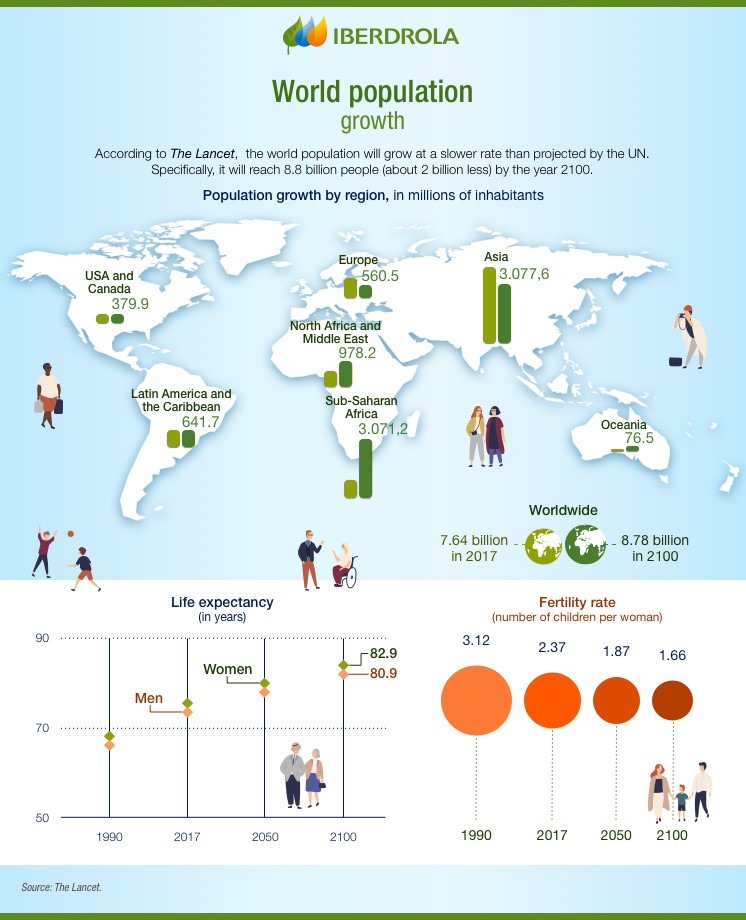
Refer to the increase in population for this representation and depiction. Also refer to the increased freshwater consumption over the years. You will notice a relative relationship between these two metrics under close observation.
If you go through the data below carefully, you will realize that there is a trend observed in increased water stress across different nations

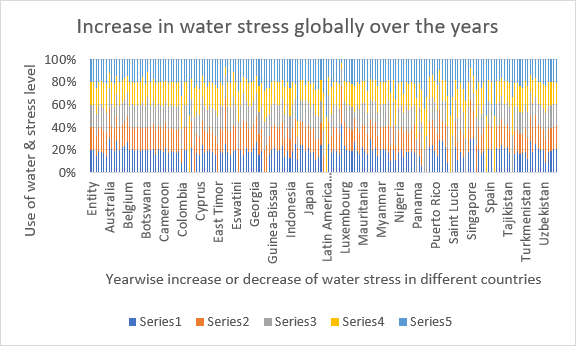
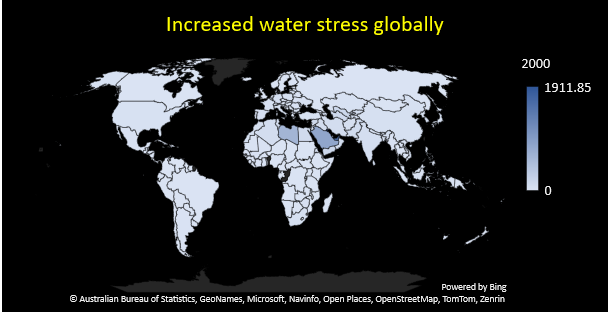
| Entity (%) | 2000 | 2005 | 2010 | 2015 | 2020 |
| Afghanistan | 54.76 | 54.76 | 54.76 | 54.76 | 54.76 |
| Algeria | 79.26 | 92.49 | 104.92 | 125.99 | 137.92 |
| Angola | 1.7 | 1.87 | 1.87 | 1.87 | 1.87 |
| Antigua and Barbuda | 7.63 | 9.81 | 8.85 | 8.46 | 8.46 |
| Argentina | 8.42 | 9.35 | 10.27 | 10.46 | 10.46 |
| Armenia | 37.74 | 55.9 | 42.89 | 66.01 | 57.09 |
| Australia | 8.71 | 7.53 | 5.3 | 3.71 | 3.47 |
| Austria | 10.05 | 9.79 | 9.64 | 9.64 | 9.64 |
| Azerbaijan | 48.53 | 52.11 | 48.44 | 51.62 | 55.6 |
| Bahrain | 248.91 | 196.43 | 173.08 | 137.16 | 133.71 |
| Bangladesh | 5.72 | 5.72 | 5.72 | 5.72 | 5.72 |
| Barbados | 101.25 | 87.5 | 87.5 | 87.5 | 87.5 |
| Belarus | 6.05 | 5.62 | 5.1 | 4.77 | 4.38 |
| Belgium | 92.54 | 78.45 | 73.13 | 49.07 | 51.58 |
| Belize | 1.26 | 1.26 | 1.26 | 1.26 | 1.26 |
| Belize | 1 | 0.98 | 0.98 | 0.98 | 0.98 |
| Bermuda | 3.92 | 3.92 | 4.24 | 4.24 | 4.24 |
| Bhutan | 1.41 | 1.41 | 1.41 | 1.41 | 1.41 |
| Bolivia | 1.11 | 1.15 | 1.18 | 1.18 | 1.18 |
| Bosnia and Herzegovina | 2.47 | 2.51 | 2.89 | 2.78 | 2 |
| Botswana | 2.03 | 2.04 | 2.06 | 1.96 | 2.31 |
| Brazil | 2.65 | 2.73 | 3.54 | 3.02 | 1.48 |
| Brunei | 3.47 | 3.47 | 3.47 | 3.47 | 3.47 |
| Bulgaria | 45.33 | 46.98 | 44.05 | 41.61 | 37.52 |
| Burkina Faso | 6.2 | 7.82 | 7.82 | 7.82 | 7.82 |
| Burundi | 10.48 | 10.19 | 10.19 | 10.19 | 10.19 |
| Cambodia | 1.04 | 1.04 | 1.04 | 1.04 | 1.04 |
| Cameroon | 1.39 | 1.56 | 1.56 | 1.56 | 1.56 |
| Canada | 4.31 | 4.27 | 3.83 | 3.68 | 3.73 |
| Cape Verde | 7.18 | 8.43 | 8.43 | 8.43 | 8.43 |
| Central African Republic | 0.31 | 0.34 | 0.34 | 0.34 | 0.34 |
| Chad | 3.81 | 4.29 | 4.29 | 4.29 | 4.29 |
| Chile | 7.35 | 8.71 | 8.98 | 8.98 | 8.98 |
| China | 40.23 | 40.47 | 42.86 | 43.22 | 41.52 |
| Colombia | 1.16 | 1.54 | 2.37 | 3.89 | 4.36 |
| Comoros | 0.83 | 0.83 | 0.83 | 0.83 | 0.83 |
| Congo | 0.03 | 0.03 | 0.03 | 0.03 | 0.03 |
| Costa Rica | 0 | 0 | 0 | 5.45 | 5.35 |
| Cote d’Ivoire | 6.17 | 6.78 | 5.84 | 5.09 | 5.09 |
| Croatia | 0 | 1.37 | 1.5 | 1.52 | 1.48 |
| Cuba | 18.02 | 18.1 | 20.71 | 23.94 | 23.94 |
| Cyprus | 22.01 | 22.79 | 27.46 | 31.71 | 37.59 |
| Czechia | 32.57 | 29.58 | 29.67 | 24.33 | 20.77 |
| Democratic Republic of Congo | 0.19 | 0.23 | 0.23 | 0.23 | 0.23 |
| Denmark | 20.53 | 17.01 | 21.87 | 21.95 | 26.4 |
| Djibouti | 6.33 | 6.33 | 6.33 | 6.33 | 6.33 |
| Dominica | 8.3 | 8.58 | 10 | 10 | 10 |
| Dominican Republic | 26.96 | 30.21 | 39.55 | 39.55 | 39.55 |
| East Timor | 0 | 28.27 | 28.27 | 28.27 | 28.27 |
| Ecuador | 6.41 | 6.78 | 6.78 | 6.78 | 6.78 |
| Egypt | 103.88 | 119.15 | 134.43 | 110.93 | 141.17 |
| El Salvador | 8.58 | 13.21 | 7.16 | 2.36 | 2.43 |
| Equatorial Guinea | 0.16 | 0.18 | 0.18 | 0.18 | 0.18 |
| Eritrea | 7.94 | 11.18 | 11.18 | 11.18 | 11.18 |
| Estonia | 15.13 | 18.03 | 19.94 | 17.48 | 9.23 |
| Eswatini | 75.67 | 77.56 | 77.56 | 77.56 | 77.56 |
| Ethiopia | 0 | 24.04 | 27.78 | 31.51 | 32.26 |
| Fiji | 0.29 | 0.3 | 0.3 | 0.3 | 0.3 |
| Finland | 6.96 | 14.13 | 11.52 | 6.46 | 7.11 |
| France | 28.63 | 29.28 | 25.02 | 24.61 | 23 |
| Gabon | 0.43 | 0.5 | 0.5 | 0.5 | 0.5 |
| Gambia | 1.97 | 2.21 | 2.21 | 2.21 | 2.21 |
| Georgia | 6.24 | 5.91 | 5.75 | 5.27 | 5.39 |
| Germany | 61.52 | 51.78 | 45.22 | 33.91 | 33.5 |
| Ghana | 4.28 | 4.87 | 5.46 | 6.27 | 6.31 |
| Greece | 18.24 | 19.51 | 19.94 | 20.04 | 20.48 |
| Grenada | 0 | 5 | 6.14 | 7.05 | 7.05 |
| Guatemala | 0 | 5.43 | 5.74 | 5.74 | 5.74 |
| Guinea | 0.89 | 0.88 | 1.07 | 1.26 | 1.37 |
| Guinea-Bissau | 1.5 | 1.5 | 1.5 | 1.5 | 1.5 |
| Guyana | 3.74 | 3.57 | 3.3 | 3.3 | 3.3 |
| Haiti | 12.4 | 12.95 | 13.38 | 13.38 | 13.38 |
| Honduras | 4.62 | 4.62 | 4.62 | 4.62 | 4.62 |
| Hungary | 10.09 | 9.66 | 9.27 | 6.96 | 8.07 |
| Iceland | 0.22 | 0.25 | 0.36 | 0.38 | 0.39 |
| India | 62.68 | 64.59 | 66.49 | 66.49 | 66.49 |
| Indonesia | 15.11 | 19.67 | 24.23 | 28.78 | 29.7 |
| Iran | 77.39 | 81.29 | 81.29 | 81.29 | 81.29 |
| Iraq | 92.69 | 79.64 | 66.6 | 49.02 | 79.51 |
| Ireland | 4.67 | 3.85 | 4 | 5.79 | 21.64 |
| Israel | 139.19 | 121.29 | 115.61 | 98.87 | 110.09 |
| Italy | 39.7 | 32.32 | 29.7 | 29.92 | 29.81 |
| Jamaica | 10.49 | 11.86 | 13.23 | 7.67 | 12.47 |
| Japan | 41.56 | 38.36 | 37.24 | 36.74 | 36.05 |
| Jordan | 82.57 | 95.94 | 98.9 | 96.16 | 104.31 |
| Kazakhstan | 29.13 | 34.4 | 33.02 | 30.04 | 34.1 |
| Kenya | 12.86 | 21.24 | 26.53 | 26.55 | 33.24 |
| Kuwait | 1911.85 | 2380.54 | 2889.77 | 3399 | 3850.5 |
| Kyrgyzstan | 65.45 | 52.61 | 50.04 | 50.04 | 50.04 |
| Laos | 0 | 2.28 | 3.75 | 5.12 | 4.79 |
| Latin America and the Caribbean (UN) | 0 | 0 | 0 | 5.75 | 5.98 |
| Latvia | 1.71 | 1.31 | 1.62 | 1.04 | 1.07 |
| Lebanon | 41.08 | 35.56 | 47.18 | 58.79 | 58.79 |
| Lesotho | 2.57 | 2.57 | 2.57 | 2.57 | 2.57 |
| Liberia | 0.24 | 0.26 | 0.26 | 0.26 | 0.26 |
| Libya | 615.43 | 698.07 | 783.12 | 817.14 | 817.14 |
| Lithuania | 21.85 | 17.02 | 7.47 | 2.75 | 1.83 |
| Luxembourg | 4.93 | 4.35 | 3.95 | 3.71 | 3.96 |
| Madagascar | 11.19 | 11.26 | 11.26 | 11.26 | 11.26 |
| Malawi | 15.95 | 17.5 | 17.5 | 17.5 | 17.5 |
| Malaysia | 2.89 | 2.99 | 3.09 | 3.19 | 3.44 |
| Maldives | 17.67 | 14.48 | 3.38 | 15.67 | 15.67 |
| Mali | 7.45 | 7.97 | 8 | 8 | 8 |
| Malta | 61.27 | 70.65 | 80.99 | 82.77 | 81.86 |
| Mauritania | 15.71 | 13.25 | 13.25 | 13.25 | 13.25 |
| Mauritius | 22.17 | 25.12 | 23.16 | 22.25 | 22.06 |
| Mexico | 25.57 | 28.58 | 29.87 | 32.13 | 44.82 |
| Moldova | 20.66 | 12.65 | 12.64 | 12.47 | 12.56 |
| Mongolia | 3.59 | 3.75 | 3.9 | 3.15 | 3.4 |
| Morocco | 60.48 | 63.47 | 50.75 | 50.75 | 50.75 |
| Mozambique | 1.04 | 1.3 | 1.52 | 1.75 | 1.75 |
| Myanmar | 5.8 | 5.8 | 5.8 | 5.8 | 5.8 |
| Namibia | 0.9 | 0.86 | 0.86 | 0.86 | 0.86 |
| Nepal | 8.37 | 8.31 | 8.31 | 8.31 | 8.31 |
| Netherlands | 16.01 | 21.93 | 20.75 | 15.97 | 16.8 |
| New Zealand | 2.76 | 3.79 | 4.24 | 8.05 | 8.05 |
| Nicaragua | 2.42 | 2.63 | 2.64 | 2.42 | 2.22 |
| Niger | 3.59 | 4.2 | 5.45 | 7.34 | 11.02 |
| Nigeria | 7.99 | 8.97 | 9.67 | 9.67 | 9.67 |
| North Korea | 27.41 | 27.74 | 27.74 | 27.74 | 27.74 |
| North Macedonia | 16.75 | 28 | 22 | 20.83 | 38.7 |
| Norway | 1.83 | 2.08 | 2.13 | 2.06 | 2.05 |
| Oman | 92.86 | 91.11 | 107.11 | 116.71 | 116.71 |
| Pakistan | 105.86 | 109.77 | 113.66 | 120.79 | 116.31 |
| Palestine | 40.08 | 58.19 | 38.63 | 41.53 | 50.26 |
| Panama | 0 | 0 | 0.77 | 0.93 | 0.9 |
| Papua New Guinea | 0.09 | 0.13 | 0.13 | 0.13 | 0.13 |
| Paraguay | 0.37 | 1.01 | 1.62 | 1.84 | 1.84 |
| Peru | 0 | 0 | 3.41 | 5.63 | 7.18 |
| Philippines | 0 | 0 | 25.46 | 26.41 | 26.25 |
| Poland | 42.05 | 41.18 | 37.63 | 36.16 | 30 |
| Portugal | 21.43 | 19.08 | 17.97 | 17.3 | 12.32 |
| Puerto Rico | 19.12 | 22.29 | 22.71 | 19.54 | 19.54 |
| Qatar | 282.59 | 374.14 | 409.91 | 431.03 | 431.03 |
| Reunion | 13.69 | 12.34 | 11.79 | 5.3 | 4.3 |
| Romania | 9.03 | 5.72 | 5.82 | 6.05 | 6.01 |
| Russia | 4.83 | 4.41 | 4.43 | 3.97 | 4.12 |
| Rwanda | 4.97 | 8.34 | 12.46 | 16.57 | 20.2 |
| Saint Kitts and Nevis | 0 | 0 | 0 | 50.83 | 50.83 |
| Saint Lucia | 0 | 0 | 14.3 | 14.3 | 14.3 |
| Saint Vincent and the Grenadines | 9.75 | 9.5 | 8.5 | 7.9 | 7.9 |
| Sao Tome and Principe | 0.79 | 1.13 | 1.47 | 1.81 | 1.88 |
| Saudi Arabia | 819.76 | 894.82 | 914.51 | 948.88 | 974.17 |
| Senegal | 8.45 | 12.08 | 12.53 | 12.99 | 16.28 |
| Serbia | 0 | 0 | 4.98 | 5.28 | 6 |
| Sierra Leone | 0.44 | 0.5 | 0.5 | 0.5 | 0.5 |
| Singapore | 313.89 | 377.52 | 219.91 | 84.58 | 83.12 |
| Slovakia | 5.04 | 3.9 | 2.58 | 2.47 | 2.39 |
| Slovenia | 0 | 6.24 | 6.26 | 6.06 | 6.78 |
| Somalia | 24.47 | 24.53 | 24.53 | 24.53 | 24.53 |
| South Africa | 40.77 | 44.18 | 47.59 | 59.75 | 65.03 |
| South Korea | 80.78 | 85.22 | 85.22 | 85.22 | 85.22 |
| South Sudan | 0 | 0 | 0 | 4.23 | 4.23 |
| Spain | 49.22 | 51.04 | 47.73 | 42.96 | 43.25 |
| Sri Lanka | 91.24 | 90.79 | 90.79 | 90.79 | 90.79 |
| Sudan | 0 | 0 | 0 | 118.66 | 118.66 |
| Suriname | 4.3 | 4.01 | 3.95 | 3.95 | 3.95 |
| Sweden | 3.88 | 3.8 | 3.88 | 3.43 | 3.58 |
| Switzerland | 9.66 | 9.02 | 8.04 | 6.51 | 6.5 |
| Syria | 134.22 | 125.96 | 125.16 | 124.36 | 124.36 |
| Tajikistan | 81.2 | 75.08 | 71.58 | 68.74 | 69.94 |
| Tanzania | 10.65 | 12.96 | 12.96 | 12.96 | 12.96 |
| Thailand | 0 | 0 | 23.01 | 23.01 | 23.01 |
| Togo | 2.58 | 3.39 | 3.39 | 3.39 | 3.39 |
| Trinidad and Tobago | 18.98 | 18.68 | 20.05 | 20.33 | 20.33 |
| Tunisia | 66.02 | 72.85 | 79.12 | 92.02 | 98.11 |
| Turkey | 31.2 | 29.9 | 34.88 | 39.89 | 45.71 |
| Turkmenistan | 127.91 | 143.56 | 144.08 | 144.73 | 135.21 |
| Uganda | 3.02 | 4.57 | 5.83 | 5.83 | 5.83 |
| Ukraine | 23.68 | 19.54 | 19.24 | 11.8 | 12.26 |
| United Arab Emirates | 1555.87 | 1866.67 | 1781.52 | 1696.36 | 1587.33 |
| United Kingdom | 21.29 | 21.96 | 14.09 | 13.91 | 14.35 |
| United States | 30.01 | 30.33 | 26.53 | 28.16 | 28.16 |
| Uruguay | 9.79 | 9.79 | 9.79 | 9.79 | 9.79 |
| Uzbekistan | 153.08 | 140.98 | 143.05 | 158.13 | 168.92 |
| Venezuela | 3.02 | 6.01 | 7.54 | 7.54 | 7.54 |
| Vietnam | 15.9 | 18.13 | 18.13 | 18.13 | 18.13 |
| Yemen | 161.14 | 169.76 | 169.76 | 169.76 | 169.76 |
| Zambia | 2.9 | 2.84 | 2.84 | 2.84 | 2.84 |
| Zimbabwe | 35.74 | 35.9 | 32.9 | 31.87 | 35.41 |
Upon careful observation, the findings can be extrapolated to fit under these findings. If sustainability initiatives are to start, these observations could serve as a base.
- In some countries like Iraq, the United Arab Emirates, Uzbekistan, Turkmenistan, Saudi Arabia, and Qatar, the water stress increase is quite prominently observed. It is clearly related to the increased population and the increase in migrant workers and immigrants, oil wells and global warming: sustainability initiatives need to be formed differently.
- Oceanic nations, small European countries and certain African developing nations have shown no significant increase in water stress over the years. The population might have been regulated by certain essential factors like their climatic conditions, dwindling resources, migrating population, and their cultural controls in place towards the use of water.
- Developed nations show a far higher water stress level, which has increased over the years, and yet the rise in stress levels is quite steady allowing governments to run better sustainability initiatives.
- No country shows an erratic rise or fall in freshwater demands over the years. It means sustainability initiatives can be developed and can also be followed for a certain period.
- Most countries show an increased water stress level, and only a few show a decline in water stress levels.
How is water use related to an increased carbon footprint, and what needs to be understood for taking sustainability initiatives includes:
- Increased use of fossil fuels.
- Increased use of electricity to transport water across channels.
- Production of water contributes to an increase in carbon footprint.
- Damage or destruction of critical water-dependent carbon sinks—peatlands—is increasing the carbon footprint significantly.
The average distribution of peatlands is found in every climatic condition: sustainability initiatives should focus on restoring these.
Here is a map to refer to the major peatland areas (reference: peatlang.org) spread across the globe.
.
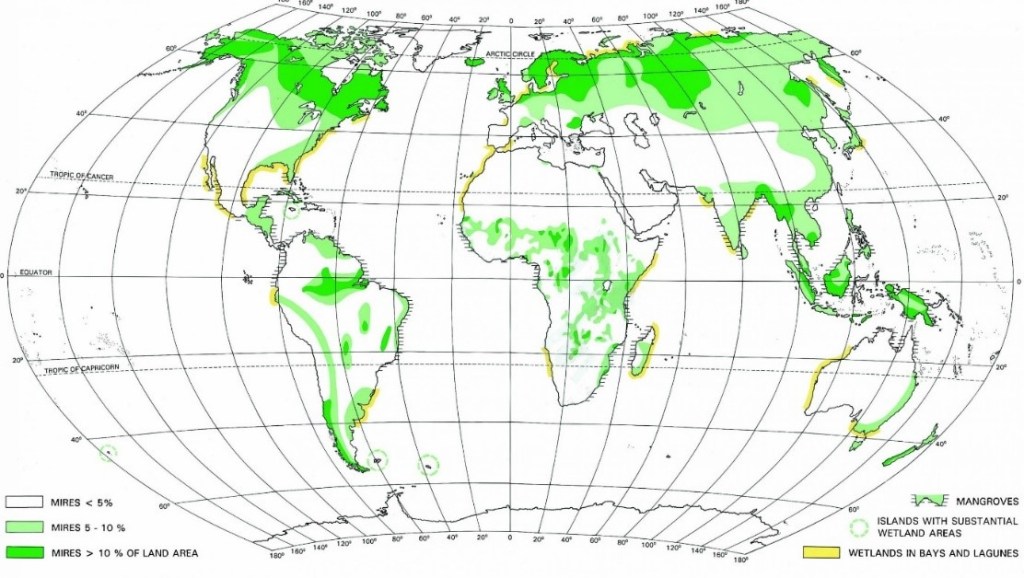
According to the UN Environment Program, Earth is losing 500000 hectares of peatlands every year. It is synonymous with 5% of annual human induced global carbon emissions.
As per forestnews.cifor.org, the loss of peatlands at this rate could contribute to 2800 years’ worth of carbon footprint. Sustainability initiatives would mean retrieving or making all efforts to safeguard the peatlands.
Almost more than 10000 hectares of peatland get destroyed for oil palm and agricultural plantations. As residential construction takes over farmlands, they destroy peatlands to increase their expanse. The greenhouse gas emissions are on the rise with each year’s reduction.
In India, peatlands are found in Kerala, Arunachal Pradesh, north Sikkim, Himachal Pradesh, and some parts of the Western Ghats. Deltas and mangroves abound around us.
Indonesia has the largest peatland area, spread across 13.43 million hectares. Sumatra, Kalimantan, and Papua. Russia, Canada, the United States, and Indonesia have the most peatlands in the world.
Sustainability initiatives need to be strong in countries where peatlands form a large part of the problem.
2. Increase in fresh water pollution across the globe & sustainability initiatives
We will also look into the conditions of different rivers in this article.
How much time and money can go into cleaning these rivers, if not the geysers, springs, lakes, and ponds?
Do you know the most polluted rivers in the world and where we might have to focus our sustainability initiatives to make the world a better place to live?
Here is a list that you can’t miss if someone is planning to understand where to start with their sustainability initiatives for changing the water we still have.
| Ganges (India) | Marilao (Philippines) |
| Citarum (Jakarta) | Matanza (Argentina) |
| Pasig (Manila) | Jordan (Israel & Jordan) |
| Buriganga (Dhaka) | Holston (E Tennessee) |
| Sarno (Pompeii) | Yellow River (China) |
| Yangtze (China) | Yamuna (India) |
| Cuyahoga (Cleveland) | Indus (trans-Himalayan) |
| Mississippi (Mississippi) | Wadi Faynan (Jordan) |
| Nile (Egypt) | Amazon (Amazon Basin) |
Each of these carries a different source of pollution. It is interesting to learn what makes these strong rivers polluted, and sustainability initiatives would mean a separate plan for every river?
| Ganges | Sustainability initiatives should focus on clearing untreated sewage, agricultural waste, burnt bodies |
| Citarum | Toxic wastes, textile wastes, garbage, wastewater, livestock and fishery waste |
| Pasig | Garbage, untreated household wastes, and industrial sewage |
| Buriganga | Garment, dyeing plant waste, sludge |
| Sarno (Pompeii) | Industrial and agriculture waste |
| Yangtze (China) | Sustainability initiatives should focus on clearing liquid wastes from industries, agricultural, fish & pig farming, and dams |
| Cuyahoga (Cleveland) | Storm drains, sewage, toxin, fertilizer |
| Mississippi (Mississippi) | Sustainability initiatives should focus on clearing mercury, bacteria, PCB (polychlorinated biphenyl), nutrients. |
| Nile (Egypt) | Sustainability initiatives should focus on clearing nickel, cadmium, chromium, lead, copper, and zinc, apart from agricultural wastes, oil, & wastewater |
| Marilao (Philippines) | Fur, textiles, municipal waste bins, untreated hexavalent chromium, and tannery waste |
| Matanza (Argentina) | Sustainability initiatives should focus on clearing effluents from 15000 industries |
| Jordan (Israel & Jordan) | Sewage, fertilizers, pesticides, hormone-rich effluents from the fishing farms. |
| Holston (E Tennessee) | Sustainability initiatives should focus on clearing RDX (Royal Demolition eXplosive- 1,3,5-trinitro-1,3,5-triazine) from Holston Army Ammunition Plant reaches its waters and supplies it to 56000 Tennessee and Virginia residents. |
| Yellow River (China) | Sewage, agricultural and farmland waste, and environmental plastic waste. |
| Yamuna (India) | Sustainability initiatives should focus on clearing domestic sewage, industrial effluents and agricultural effluents |
| Indus (trans-Himalayan) | Agricultural wastes, sodium nitrates, phosphates, and pesticides. |
| Wadi Faynan (Jordan) | Heating blue-green copper ore and charcoal over fire during the Copper Age |
| Amazon (Amazon basin) | Sustainability initiatives should focus on clearing mercury, artisanal, and small-scale gold mining |
If you carefully go through the waste sources, no two rivers are the same even in their nature. Different cleaning techniques need to be available for different kind of pollutant present in different rivers. But that would surely mean spending an exorbitant sum of money, and governments will need to put special funds in place.
Ganges was getting cleaned as part of the Clean Ganga project, a part of several sustainability initiatives for the current Ganga, but there will always be a need for regular maintenance of the level of cleanliness the government tried to achieve with this project.
3. Increase in industrial development
In 1981, as per data analysis, almost one-third of the world population lived below poverty, compared to 2001, when it stood at 18%. Keeping in mind that there was a huge increase in the world’s population from 1981 to 2001, the decrease in poverty margins among people is a significant achievement. Sustainability initiatives would mean striking a balance between industrial development and the environment.
Post-World War II, a few countries did very well in decreasing the poverty margin in their populations. Few among them were China, Korea, India, Taiwan, Indonesia, Mexico, and Brazil.
The driving force behind this rapid development of these countries, especially China and India (two countries with the world’s largest population), could only be possible due to the rapid industrial development of these two nations. Even South Korea’s growth heavily relies on their ability to develop their industries quickly.
India grew due to its industrialization policies and dominance of the state in economic matters. But every country that rapidly grew from developing to developed and developed to augmented developed nations benefitted the most from their industrial revolution attempts, including the United States and the United Kingdom.
What led to such enormous growth also led to the decline of our environment. The world seems like a two-way sword at times. If you want to abolish something, you will, in return, create something equally harmful and deleterious. Both sides of the sword indicate nothing but death, and man is in constant struggle with these sides. To keep one side, they are always losing the other side, and sustainability initiatives would mean striking a balance.
Industrial effluents, harmful chemicals, plastics, and poisonous sludge or metal fluids get released into large rivers, causing massive pollution of the environment. Industrialization and the environment should balance and support each other. The countries with the most favorable and least favorable environments heavily depend on industrialization. Below are the names of countries that might help you understand which countries have grown minimally in the industrial segment and still have a favorable environment.

| Country | EPI (Environmental Performance Index) |
| Denmark | 77.9 |
| United Kingdom | 77.7 |
| Finland | 76.5 |
| Malta | 75.2 |
| Sweden | 72.7 |
| Luxembourg | 72.3 |
| Slovenia | 67.3 |
| Austria | 66.5 |
| Switzerland | 65.9 |
| Iceland | 62.9 |
| India | 18.9 |
| Myanmar | 19.4 |
| Vietnam | 20.1 |
| Bangladesh | 23.1 |
| Pakistan | 24.6 |
| Papua New Guinea | 24.8 |
| Liberia | 24.9 |
| Haiti | 26.1 |
| Turkey | 26.3 |
| Sudan | 27.6 |
These high EPI countries have undergone the least environmental damage, have managed their industrial revolution better, or have been conservative about it. Their water bodies are also, thus, in better condition than other countries down the list. Even those not mentioned in the list are not doing very well with their water pollution levels. Hence, decreasing the drainage of industrial effluents into rivers needs to be stopped to regain the health of this planet.
The Environmental Performance Index is an indirect way of measuring how polluted the water is. There are obviously direct measuring methods, and yet, EPI can help come to a conclusion immediately.
4. Food Production & Sustainability Initiatives
Fertilizers help in the production of crops, and food production often relies heavily on fertilizers to meet its demands. The rise in population, less arable land space, and increased market pressure are some of the key factors contributing to the increased use of fertilizers.
According to the fertilizer market forecast, the market will reach $202.89 million by 2026. A CAGR of 4.5% is being predicted for the years 2021–2026.
According to Statista’s report, the fertilizer market is growing for fertilizers like nitrogen, phosphorus pentoxide, and potassium oxide.
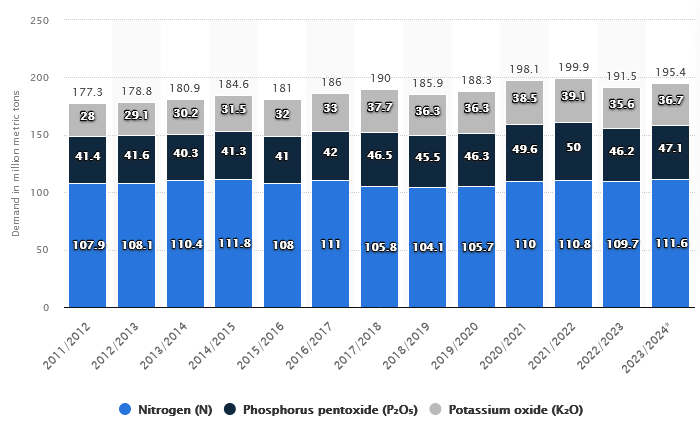
Despite efforts being put in place to minimize the impact of fertilizers and decrease their demands, their increased use is a cause for concern for the environment.
Coating urea with neem oil is being largely used in India as part of the nano urea project. Benefits include lesser use of urea, and even bag sizes have been reduced from 50 kg to 45 kg. Liquid nanourea (LNU) is a necessity, as it is the best way to supply nitrogen to crops. But despite every effort, it is still a challenge difficult to overcome.
Excessive use of fertilizers causes the leaching of nutrients like nitrogen and phosphorus into water bodies. This kind of activity will lead to an algal bloom, eutrophication, and other environmental problems.
5. Improved sanitation
Improved sanitation is a necessity in today’s world, but sanitation is causing a lot of underground water pollution. The seepage of sewage into underground water channels is increasing due to increased underground sewage flow.
Construction sites do not maintain the basic standards and rules of sanitary hygiene. The distance between two sewage pits is not being maintained due to excessive cramming of buildings in certain areas. The building of sewage pits is often not done properly, and cracks in these sanitation pits also lead to seepage of sewage into neighboring areas.
Defective pipes, joints, and manholes contaminate the surrounding area. Different parameters guide the seepage of water to surrounding areas, like the length of the collection pipe network, diameter of pipelines, drainage areas, soil types, water table depths, topography, and number of connections per unit area.
Sustainability initiatives in terms of improved sanitation would mean either creating more and more self-sustainable villages using their own sewage for producing bio gas that can serve their needs well. In this way, keeping the atmosphere clean is easily feasible.
6. Planned gardening efforts
Planned gardening is the new way to beautify our surroundings. In terms of planned gardening, Australia tops the list, closely followed by China, Mexico, the US, and Germany. South Korea also has a lot of planned gardens, along with Japan, Spain, Russia, and Argentina.
Planned gardening ensures the loss of plants and trees is minimized, but on the other hand, it can be a polluting factor for the soil and nearby water bodies. The natural environment is lost, and what takes over is an artificial environment where man guides the show. Small water bodies face leaching issues, and most lakes are examples of such damage.
Some lakes are surrounded by artificial gardens to attract tourists. However, it consistently serves as a source of damage to the water body.
However, there is already a better version of these gardens called the rain gardens, where the rain water supposedly serves as a way to rehydrate the nearby aquifers.
Keeping a check on planned gardening can prevent the increased use of fertilizers and excessive use of freshwater for maintaining these gardens in regions where there are no recycled water plants.
7. Increased construction activities
Construction activities have increased manifold. Huge amounts of water go into creating the concrete forests, and a lot of water is pulled out of the available surrounding water bodies. Drying up the neighboring borewells or wells happens when there is a sudden increase in the extraction of water at a particular point in an area. The fact that the water table dips in these areas becomes a source of concern for many.
With China standing atop having 1175 infrastructures coming up in 2022, others follow closely.
An estimated 350 to 400 liters of water are spent constructing a one-square-foot wall. It incorporates several activities in the process.
- Residing people on the site
- Brick laying
- Cleaning equipment
- Making mortar
- Wetting the bricks
Watering the walls to promote proper adhering of the cement to the brick and sand
8. Increased hospital and educational facilities
Hospital waste and more and more educational facilities are undoubtedly helping the growth of the world. But they are adding sewage and other kinds of waste that are concentrating more in a place and seeping underground.
A single place could be impacting the surroundings harshly. The use of larger amounts of groundwater is also quite prevalent in these organizations and institutions. Thus, it is but usual that the water table of these places goes down, harming the normal surrounding requirements.
9. Sustainability initiatives impaired by misuse of water
If underground water could be used only for drinking and recycled water could be available in every country and region, it could still solve our problem. But constructing these huge mechanisms for recycling water is a fund-depleting initiative. As part of sustainability initiatives, not misusing water is thus the most rational step forward.
Dripping water from tankers, open taps, broken taps, and no-lock taps serves to spill water more and more. Additionally, broken pipelines and dripping storage facilities could save tons of water that could be reutilized for better.
10. Encroachment of fresh water resources by certain profit motive agencies
Sustainability initiatives cannot succeed as long as there are people who hoard the water and sell it for higher prices.
In a recent report from last year with the Food and Water Watch, it was claimed that many big banks and companies are buying water from rural places and suburbs. Companies are buying farms that have attached water claims. During droughts, this hoarded water would be sold at prices of gold or higher, according to many.
But waiting for drought and hoarding what could be utilized by people is adding to the climate crisis. It is also becoming a significant concern for those who need water right now and surely serves as a roadblock for those working towards granting and ensuring sustainability initiatives.
Wealthy rich people are drilling deeper than the municipalities to acquire the water drying out wells and nearby water facilities.
Australia, Chile, the United States, Iran, and even the United Kingdom are some of the most prominent water trading markets worldwide.
Conclusion
Sustainability initiatives of the olden days would need to be revived within a short period of time. These measures must be implemented at a national level, with penalties for regions not abiding by the water laws. This could perhaps save the country from facing the wrath of these sixty thousand clans of fish who got sacrificed for the welfare of humanity and still recycle back to us, bringing food to us, or even Kapil Muni’s and King Bhagirath’s contribution towards creating a better land in India (earlier known as Bharat).
Microplastics in Humans [New Understanding in 2024]

Microplastics in humans is the new disease and to understand it, you will need to start from the basics.
When plastic was invented by Leo Baekeland in 1907, little did he think that these plastics would one day contribute to the disease of this planet. He had used phenol and formaldehyde under pressure and heat conditions to make what we call modern-day plastic. His invention was patented owing to the value it was supposed to add to the world. But that same very plastic is a menace now in the form of microplastics in food and in almost everything.
“A gift before is a curse now.”
The fact is, we need plastic even today, as it can make our lives much easier. But the problem is, we cannot hoard plastic, which means we have to throw it out. But where are we throwing it? Within our own Earth! What is happening due to it?
The Earth is slowly filling up with a lot of plastic, and soon enough, we might be wading not through water and snow but through plastic to make our way to our offices and homes.
Microplastics are already within us and the food we eat. Soon, our body might have a good amount of plastic, which is what is being predicted right now. We might soon be made of microplastics, and in no time, it means we would have one more way to bring down the earth.
Here is a brief list of dates that tell you when this kind of plastic was invented.
| Year | Plastic Type |
| 1907 | Bakelite |
| 1926 | PVC (polyvinyl chloride) |
| 1935 | Polyamide |
| 1938 | Polytetrafluoroethylene (Teflon) |
| 1940 | Silicone and synthetic rubber |
| 1947 | Rilsan (bioplastics) |
| 1949 | Melamine-formaldehyde, MF’ (Formica), followed by polyester |
| 1953 | Multi-sectoral plastic |
| 1993 | Bioplastics came into being |
What is microplastics?
By now, we might have guessed that microplastics are nothing but remnants of all the plastic that was there on Earth once.
Any plastic remnant that is less than 5 mm (0.2 inches) or smaller gets classified and termed microplastics.
There are eminently different sources from which microplastics generate, and some of them are:
- Larger plastic debris from which they generate
- Microbeads are a type of microplastic.
- Resin pellets that are used in manufacturing plastic.
What are the two kinds of microplastics in humans right now?
Microplastics of two types are ruling humans right now: primary and secondary types.
The primary microplastics are usually different in many ways from the secondary microplastics, and these points are used to classify the primary microplastics from the secondary ones.
If you want to know more about the difference between the two types of plastics, you will need to go through the table here.
| Primary Microplastics | Secondary Microplastics |
| Primary microplastic crystals are artificially created | Secondary microplastics are remnants of the larger plastic mass |
| Primary microplastics are manufactured for different purposes | Secondary microplastics are everywhere and cause unnecessary health hazards |
When in the water, fish consume them and get recycled back to us.
We humans have traces of microplastics in almost every major organ of the human body.
Here is a list of where all microplastics were found in the human body.
- Spleen
- Lungs
- Liver
- Colon
- Feces
- Placenta
- Breastmilk
- Heart tissue
- Blood
- Skin
- Digestive system
- Human Cells
- Biliary tract
- Gastrointestinal tract
- Intestine
Through a study, it was found that the human body has primarily plastics of the following kinds:
- PE (Polyethylene)
- PET (Polyethylene Terephthalate)
- PP (Polypropylene)
- PS (Polystyrene)
- PVC (Polyvinyl chloride)
- PC (Polycarbonate)
- PMM (Polymethyl methacrylate)
- TPU (Thermoplastic polyurethane)
At some point, all of us want to know how microplastics enter the human body. We already know that microplastics enter our body through food, which means we would have to be careful about food, but can we be?
There is not just one source for the microplastics to enter our body; they enter in different way.
How do microplastics enter our body?
The microplastics in humans body enter through the following routes:
- Oral intake includes food, drinks, and baby teas.
- We inhale them as they are small enough to wander with the air.
- Through skin contact with plastic materials. Admit it or not, we are all fairly and always surrounded by plastic. A few examples would include our phone cases, personal care products like the shaving kit, our beauty products, and most importantly, our plastic-contaminated clothes.
Here is a probable list of all those materials that can lead to microplastic exposure.
| Vegetables exposed to sewage sludge |
| Shellfish consumption |
| Effects on food of activities like plastic mulching |
| Plastic food containers |
| Baby teats |
| Plastic drinking water bottles |
| Face cream |
| Face cleansers |
Why are microplastics in human health getting closely related?
According to the unraveling of new information, microplastics in humans are getting in the way of our health.
A lot of studies are being done that are shifting people’s attention from the underlying causes previously determined for various diseases towards microplastics.
Some of the diseases where microplastics in humans are added as additional causes currently include:
- Cardiovascular diseases
- Obesity
- Metabolic disorders
- Organ-level dysfunctions
- Reproductive and developmental toxicities
- Neurotoxicity
- Increased oxidative stress and DNA damage
- Decreased immune responses
Here is a bit more on every kind of disease that is happening to us if we have microplastics inside us.
Pointers for the role of microplastics in human health
1. Immune responses to microplastics
Different kinds of microplastics in humans will produce different kinds of immune responses.
For example, amino-modified polystyrene (PS) inhibits phagocytosis of macrophage cells (M1 and M2).
Carboxyl-modified PS will not impact the phagocytosis of M2 cells.
Phagocytosis is the process of ingesting and removing particles less than 5 mm in size. Different kinds of cells can show phagocytosis.
Monocytes, macrophages, osteoclasts, dendritic cells, eosinophils, and neutrophils will comprise the pack of cells responsible for carrying out the process of phagocytosis.
2. Organ-level impacts of microplastics in humans
Here are some of the types of microplastics and their impacts on different organs of the body covering more on microplastics in humans.
| Organoid Types | Types of microplastics | Toxic effects | Amount of exposure | Duration of exposure |
| Airway | Polyester fibers from clothes | Inside the cellular layer, they can reduce SCGB1A1 gene expression, a biomarker of lung injury. | 1-50 mcg/ml | 1 week |
| Forebrain | Polystyrene (PS): 1–10 mcm size | Reduced embryonic brain-cell tissue viability | 5-100 mcg/mL | 7-27 days |
| Intestinal | PS: 50 nm size particles | Cell apoptosis, inflammation, and active endocytosis into enterocyte cells | 10-100 mcg/mL | 1-2 days |
| Liver | PS: 1 mcm size | Hepatotoxicity, disturbed lipid metabolism, HNF4A, and CYP2E1 in liver organoids | 0.25-25 mcg/mL | 48 hours |
3. Intestinal damage: microplastics in humans
Microplastics in humans can lead to the dysfunction of the liver and the intestine. These are the ways it will start the dysfunction within your body.
- Polystyrene of size 50 mcm and above will create stronger oxidative stress.
- PS values less than 45 mcm will imbalance the microflora.
- When in the intestine, they would significantly reduce the capacity to digest lipids.
- They also aggravate the activity and, in turn, the toxicity of the OPFRs (organophosphate flame retardants).
4. Impact on the immune response: microplastics in humans
Animal studies have shown that there are the following problems with the immune response of the body when there are microplastics in humans:
- Interleukin-1α (IL-1α) increases in rat serum.
- PS inhalation causes upregulated expression of tumor growth factor (TGF-β) and tumor necrosis factor (TNF-α) in rats.
- A significant increase in TNF-α, IL-1 β, and (interferons) IFN-γ occurs with the ingestion of microplastics of any size.
These are enough to imbalance the intestine in a major way, and rest is a non-ending chain process that can cause debilitating impacts on the intestine.
5. Neurotoxicity induction: microplastics in humans
They destroy the nerve conduction system and the acetylcholine activity.
All this and more has already been studied in molluscans, nematodes, and crustaceans.
Apart from all this, the reproductive system is also destroyed in the process.
Removing microplastics from water: microplastics in humans
Eliminating microplastics in humans is a process that is already gaining speed and when it comes to water management, here we are;
- Simply boiling your tap water can remove 90% of the microplastics from it.
- Activated carbon found in normal filters can also help remove nano plastics and microplastics.
- Egg white is being used to create monolithic aerogel for promoting water filtration.
- Several polysaccharide extracts, like those from fenugreek, okra, cactus, aloe vera, tamarind, and psyllium, were used to capture microplastics.
Removing microplastics from food
Boiling and cooking food properly and even coagulating the food also removes microplastics, though not successfully every time. Microplastics in humans is the number one cause of concern presently.
Eliminating microplastics from aquatic and waste water resources is still being tried.
Every process is being worked at to make new innovative ways walk in, but then removing microplastics from food is essential, and so is its removal from nature.
14 New Eco-Friendly Food Packaging Options (2024)
10 Atmospheric Water Generator Prototypes To Change The World
Prevent cancer recurrence with new resveratrol and copper

What or how do we want to tackle cancer recurrence? Mostly cancer recurrence is not tackled and it is only now that with the coming of the new resveratrol and copper treatment that cancer recurrence might not be another chapter in the lives of cancer survivors.
How far is it possible to defeat cancer? It is a question most of the affected families ask themselves every day. Each is worried about a different form of cancer, and cancer recurrence is the most worrying part for all patients who survive it. Cancer is not a fear only the patient suffers from; it is a fear their family too suffers from terribly. Each day is a battle hereon, and cancer recurrence rates worry individuals more than anything in the world.
What is the current cancer recurrence rate for different forms of cancer? The list below can provide you more information on it.
| Cancer type | Tried medication | Cancer recurrence rate |
| Hodgkin’s lymphoma (HL) | Multiagent chemotherapy | 10%-13% |
| Relapsed HL | With second line therapy | 20%-50% |
| AML (acute myeloid leukaemia) low-risk | After normal treatment | 9% |
| Bladder cancer | Cystectomy | 50% |
| Breast cancer | Mastectomy, Chemotherapy, Radiotherapy | 30% |
| Breast cancer | Letrozole or placebo | 5%-9% |
| Colorectal Cancer | Curative surgical resection & clear margins at microscopic levels | 17% |
| Glioblastoma | Standard treatment | 100% |
| Head & Neck | Stage IV with intense, split course, hyperfractionated, multiagent chemoradiotherapy | Located within a region: 17% Spread distantly: 22% |
| Hodgkin’s lymphoma | With primary treatment | 10-13% |
| Hodgkin’s lymphoma | With second line treatment | 20% to 50% |
| Renal | Complete treatment module | 13% |
| Renal | Complete tyrosine kinase inhibitor therapy | 49% |
| Acute Lymphoid Leukemia in children | Completion of therapy | 15%-20% |
| Acute myeloid leukemia | In children after therapy completion | 9-29% depending on the risk |
| DLBCL (diffuse large B-cell lymphoma) | Completion of therapy | 30%-40% |
| Peripheral T-cell lymphoma (PTCL) | Complete therapy | 75% |
| Melanoma | After first line therapy | 15%-41% |
| Melanoma | Completion of therapy for metastasis | 87% |
| Non-small cell lung cancer (NSCLC) | Curative surgery | 26% |
| NSCLC | Chemoradiotherapy for locally advanced disease | 27% |
| Osteosarcoma | Local recurrence | 11%-12% |
| Osteosarcoma | After metastasis treatment | 5%-45% |
| Ovarian | After treatment completion | 85% |
| Prostate | After prostatectomy | 10 years |
| For low-risk disease therapy | 24% | |
| Intermediate risk disease therapy | 40% | |
| High risk disease therapy | 48% | |
| Pancreas | 1-year curative therapy | 36% |
| Adjuvant chemotherapy after local recurrence | 38% | |
| Adjuvant chemo after distant metastasis | 46% | |
| Soft-tissue sarcoma | With adjuvant chemotherapy | 50% |
| With advanced disease | 100% | |
| Thyroid | Differentiated thyroid carcinoma | 30% |
| Surgery for medullary thyroid carcinoma | 8%-14% |
Is there any medicine that can prevent cancer recurrence?
Until now, there have been theories, and except for the presence of adjuvant therapies, there has been nothing else so far. The different types of available adjuvant therapy forms are hormonal, chemical, immunological, radiation, and targeted ones. These therapies claim to prevent the cancer recurrence to an extent.
But these have a lot of “ifs and buts” in place. For example, the success of adjuvant therapy depends on the type, stage, lymph node involvement, hormone receptivity chances, and many other probabilities.
However, as per the recent information available, Tata Institute of Fundamental Research, Mumbai, has announced a discovery that can even be classified as one of the best discoveries of this century.
With more than ten years of supporting research, they claim to have found a medicine (formulation: tablet) that can prevent cancer recurrence.
The drug also claims to reduce the side effects of cancer treatment (chemotherapy and radiation) by 50%.
If you want to know the name of the new drug, you need to read further below.
Resveratrol + Cu: Name of the tablet that claims to prevent cancer recurrence
Basically, it is known to be a pro-oxidant tablet and would contain resveratrol and a metal adjuvant of copper. Upon ingestion, the tablet would generate oxygen radicals in the stomach. This would be how it would disengage cancer causing cells and prevent cancer recurrence.
More about Resveratrol
Here is the wonder drug and a bit about it’s role in preventing cancer recurrence.
What is resveratrol?
A natural phenol, it is also a stilbenoid (C6–C2–C6 structure, primarily a hydroxylated derivative of stilbene) and a phytoalexin (an antimicrobial & antioxidative substance produced in plants when in contact with a parasite capable of inhibiting the growth of the parasite).
Food sources rich in resveratrol?
Found in red grapes, resveratrol is found to be capable of expanding the blood vessels and reducing the occurrence of blood clotting altogether.
But that is not the only fruit in which resveratrol is found.
It is found even in fruits like blueberries, raspberries, mulberries, and peanuts. Altogether, 70 plant species have been found to contain resveratrol.
Essential properties of resveratrol apart from preventing cancer recurrence
- In vitro and in vivo studies have shown that resveratrol can inhibit carcinogenic growth in all stages, viz., initiation, progression, and promotion.
- Apart from being a strong anti-oxidant and antimicrobial agent, they also show
- anti-inflammatory,
- cardioprotective,
- vasorelaxant,
- phytoestrogenic and
- neuroprotective properties.
Their cis- and trans-forms are available in nature, and the trans-form is stronger functionally.
Role of Copper (Cu2+) in the drug
Copper is known to improve and enhance the healing process in individuals and hence, acts as a good adjuvant therapy towards cancer recurrence. Copper acts through the following mechanism.
1. The induction of vascular endothelial growth factor (VEGF)- enhances the growth of the vascular endothelium.
2. Angiogenesis by hypoxia-induced factor-1-alpha (HIF-1α) action. It works by enhancing HIF-1α expression and binding HIF-1α to essential motifs in the promoter.
3. It also works by increasing the role of the putative enhancer regions of HIF-1-regulated genes.
Working of resveratrol-Cu tablet
Steps into the working of the tablet
The tablet works by increasing the oxygen radicals in the stomach soon after ingestion.
High oxygen radicals will destroy the chromatin particles.
Chromatin particles are released by the dying cancer cells. The dying cancer cells release cell-free chromatin particles (cfChPs, or fragments of chromosomes).
In this way, chromatin particles cannot turn the adjacent healthy cells cancerous.
When a cell dies, it is its responsibility to alert adjacent healthy cells to brace up for a fight. But, since the cells releasing it are cancerous in nature, they turn the already healthy cells cancerous in the process.
Here, the chromatin response is non-essential since the medicine is already destroying the cancerous cells.
Thus, any drug that can prevent cancerous cells from releasing the chromatin can benefit the healthier adjacent cells.
Due to this process, the drug can also prevent the cancer cell movement from one part of the body to another; we in general use the term metastasis for it.
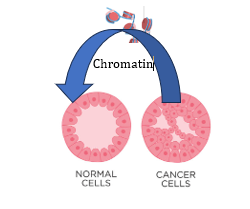
Cell-free chromatin particles- What are they?
Chromatin particles are nothing but fragments of the DNA complex and proteins contributing to the making of chromosomes.
Here’s a bit of the process in easier and more understandable ways.
1. Cells enter mitosis- asexual chromosomal cells divide to replicate.
2. Chromatin begins condensing and leads to the formation of metaphase chromosomes. Usually, the cell cycle is divided into four different phases: the G0 phase, the interphase, the G1 phase, and the S phase.
3. The G2 phase is the growth phase of the chromosomes, and then comes the mitotic phase.
4. Mitosis is again the separation of chromosomes and is divided into the following phases: prophase, metaphase, anaphase, and telophase.
When the cell-free chromatin particles get released from the cell, they are a mixture of DNA and proteins (like histones). These proteins can serve as biomarkers for different diseases. It includes cancer, autoimmune disorders, and even different inflammatory conditions.
Tests done on the cancer recurrence tablet so far
- The tablet has already been tested on rats, according to Dr. Rajendra Badve, a senior cancer surgeon. They have successfully tested it on rats for its cancer recurrence efficacy and the minimization of side effects.
Some phases of the clinical trials are already complete. It has proven to be a new therapeutic molecule promising enough for its safety and efficacy parameters.
The trials have already been conducted worldwide, and they have been found to be quite promising.
The four phases of a clinical trial are:
- First phase: done on 10–30 healthy volunteers
- Second phase: Diseased volunteers get categorized into two groups: placebo-controlled and drug-controlled groups.
- Third phase: comparison of the new treatment with the standard treatment. There are different drugs against which the novel drug gets tested.
- Fourth phase: The drug is available on the market, and a backend team continues to collect different drug-related information from patients already using the drug.
Current status of the tablet containing resveratrol-Cu
The tablet is currently awaiting approval from the FSSAI (Food Safety and Standards Authority of India).
How much will be the cost of the tablet?
It will cost just ₹100 and will be accessible to a larger population.
When will the tablet be available in the market?
By June or July, the tablet is to be made available on the market.
Here are the results and details of a few already run initial studies.

The drug is also tested for other disorders like neurological disorders, cardiovascular diseases, diabetes, and non-alcoholic fatty liver disease.



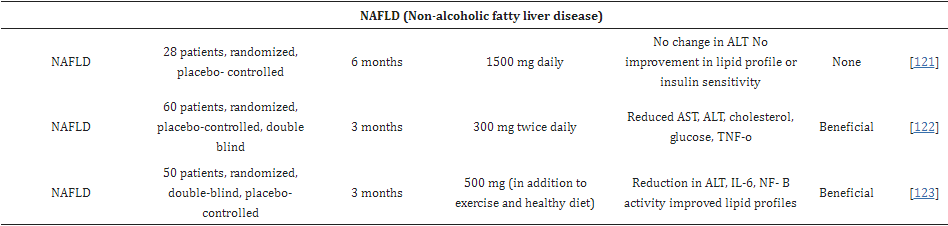
Contributions of the tablet
1. It will successfully prevent the recurrence of different types of cancer.
2. The tablet will reduce the side effects of different cancer treatments.
3. The medicine will also be effective in treating pancreatic, lung, and oral cancers.
4. Minimal side effects to none recorded until now. The drug seems to be well tolerated by patients.
Conclusion
If the tablet works as expected, people will be able to rid themselves of the stigma and fear this disease brings with it. Hearing that cancer has no cure is not going to haunt people’s lives ever again.
Even stopping cancer recurrence can go a long way for people. Young and old are into it equally, and each has a different set of sufferings altogether. Getting free of cancer recurrence will be a boon in disguise for those who know what it is to face the disease.
Abusing and using animals for human good- new to you

Using animals for the welfare of man is an old tradition. For centuries, we have relied on the use of animals for the welfare of humans. But with time, we forget that using animals for the welfare of humans was a privilege handed down to us. Soon, the time is nearing when it will be taken away from us. We all know well that we are not using our privileges responsibly.
Animal rights is a term coined to protect the rights of animals. But we are not considerate towards even the term.
There are two points I am trying to stress here in using animals:
1. Anything that allows us to use it for our benefit loses importance and becomes weak, vulnerable, and an easy target of abuse.
We are forgetting, it’s a privilege we have been allowed in using animals.
2. Harming them is not going to take us anywhere since they are a world of their own.
We have a very difficult process of understanding where some of us are built in a way neurologically and physiologically to think in the following lines:
- Animals do not work towards human welfare and the gross GDP; hence, they are exploitable.
- They are small and, therefore, by all means, insignificant and less important than humans.
- Animals would never attune to human life and living; thereby, they make themselves vulnerable. Due to their inability to mold our lives, they can easily be subjected to our wrath, neglect, and our views and opinions on them.
- We have to put everything to some use; even they should earn and live. In fact, why should we let them eat for free while we struggle to make ends meet?
All these reasons provoke people to think and take actions as they please since there are no robust laws around them.
Robust laws for using animals are intended to be directed in the following directions:
1. What kind of work they can be used for without feeling loaded and burdened.
2. How to manage their mating behaviour in such a way that they don’t seem to be a burden for humanity and yet have healthy numbers.
3. They are not targeted by loose-based people who run their lives by snatching other’s lives and wealth.
Due to all these problems, we are constantly forcing them to work as per our will and needs, thereby being responsible for their deaths, destruction, and devastation. Every action that is taken here will come back to us in some way or another. The question is when and how, which we never know.
In this article, we will point out all the ethical and non-ethical ways of using animals.
Most of us don’t even know some ways in which they are being used right now, and no or little knowledge is dangerous, and ignorance is bliss here.
Using animals in different ways
Here is how we use animals in ways that will seem painful for those who don’t use them directly for their benefit or are not a part of the entire process.
It is true that we are all built to die, but we are also built to die in a dignified way. Every single human and animal must have basic dignity. Whenever a human fails to be treated with dignity, they might resort to harming the weaker sections and the vulnerable ones. The use of animals unethically is a kind of action people take.
But it is also true that many people do it even when they have everything. They are doing it out of greed, participating in it to become bigger or to control a particular human population through the control and use of animals.
Details of using animals for areas where we can control and cease our activities.
1. Use of Animals- Whales
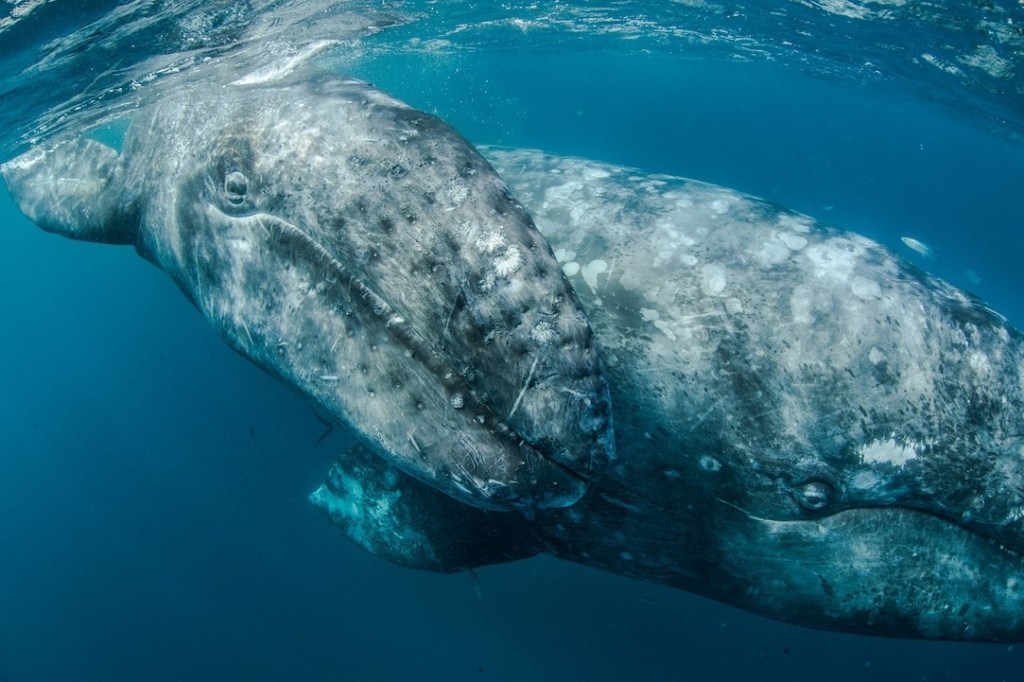
Whales have been hunted since time immemorial. Here is a list of what is done with whales.
Whale vomit
- People make perfumes out of their vomit.
- They are used to make makeup ingredients and are in heavy demand within the cosmetic industry.
- Ambergris, or whale vomit, is extracted from whale’s vomit, and each gram costs thousands of dollars.
It floats on the surface of the ocean but is banned by many nations. Ambergris or whale vomit harvesting might increase their demand, further leading to increased hunting of different types of whales. Sperm whales are heavily hunted, and if you happen to come across their vomit, it would be illegal to trade it.
Bones of whales
It is used to make figurines and tools. They are used even for making corsets and hoop skirts.
Whale Oil
- It is used to make candles and oil lamps.
- They are a source of fat and are used for making butter.
- In making soap and
- Even for making margarine
- The oil was earlier used to lubricate machinery, rifles, and different kinds of military equipment, but that was reportedly in the 18th century
Whale Meat
The consumption of whale meat goes back to the ancient times.
- The tongue of the whale is salted and eaten since many people find it to be soft and chewy.
- The blubber is distributed in many provinces when a whale is hunted down, and during Lent, many eat it with peas.
- Most used whale fat and ate it as cracklings or fritters, and it was found to be crunchy like toast.
- The Japanese market has been found to be selling the meat of the dolphin, porpoise, fin whale, and even the sperm whale.
- In Norway, Greenland, and Japan, people have a history of using the whale’s resources abundantly
.
2. Misusing and using animals: Different types of monkeys

Monkey Meat
Apart from using animals in circuses, roadshows, laboratories, and also for medical research, there are other brutal ways called fun and entertainment for humans where these animal species are being used extensively and unnecessarily.
Common in Central Africa and in many parts of Asia, Europe, and America, monkey’s meat is consumed regularly. Using animals for this purpose is a question of debate given these are extremely backward nations.
Bushmeat, some might call it, and many countries right now have restrictions or have a ban on their hunting and meat consumption.
Experiment on monkeys
- Monkeys are made to recover from sedation while their heads are restrained or severely clamped- using animals for research is extremely painful for them.
- Injection chambers are implanted on their skulls while they are recovering from head surgery.
- MRSA infection can spread in monkeys for head wounds.
- Scientists all over the world have always forcefully used animals as testing grounds on the pretext of human benefit. But what they fail to implement is a restraint on the number of them being sacrificed for their tiny results.
- Stopping their sacrifice and using humans in their place is also as unethical as using animals without counting.
- Strict laws are missing in every country on the pretext of human welfare.
- Though in current times, a regulation is in place on their sanctioned numbers, there is still a whole poaching world out there who wrongfully acquire these animals and sell them to the secret laboratories and their experiments.
- Things need to change for these poor animals, who have considered humans to be a race higher than them. Sadly, we haven’t proven ourselves to be capable of it.
- In the US alone, there are 50000 monkeys being sacrificed each year.
3. Elephants and their hunting

Almost 100 African elephants are hunted down each day by poachers, despite all restrictions. Every year, 20,000 elephants are hunted down by poachers. Using animals as big as elephants don’t seem to have big purposes but only insignificant ones.
Uses of Elephant tusks as beautifying agents
We must remember that people make jewelry out of their tusks- this is how we love using animals.
It’s like putting down these animals, where we tell them when they hunt them down that they are not bigger than us after all. “Look how we use it, and how we use you is how we think of you.”
The tusk is in such demand only as it serves to bring impeccable jewelry ranges, figurines, small carvings, piano keys, and even chess sets.
But some of the cultures have used animal tusks for healing diseases and illnesses.
Elephant tusks in terms of medicines
People can use it as medicine for the following illnesses- using animals for health benefits.
- Glowing glass skin experience: Chinese use the ivory tusk for purging toxins from the body—a beauty hack.
- Parasitic infection treatment
- Head lice
- Scabies
- River blindness
- Diarrhea
- Bone tuberculosis
- Osteomyelitis
- Ulcer
- Bone tumour
- Epilepsy
- Anti-fungal agent
Elephant meat
Cameroon, the Central African Republic, the Republic of Congo, and the Democratic Republic of the Congo are still using animals for food and exhibit a high demand for the elephant meat in comparison to other nations.
Here’s a graphical representation of the ways elephant meat is consumed in these countries.
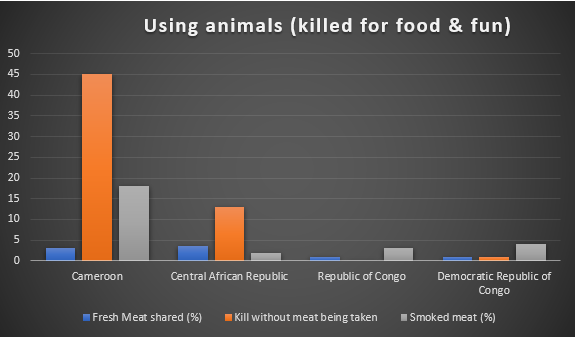
Even though many religions like Buddhism and Hinduism, even Jews, do not talk of using animals for food and eating elephant meat, elephants still get killed here. Poachers transport animals to zoos and experimental units and kill them to take their assets from wherever they can.
4. Using pangolins for human benefit: How?

A prehistoric animal, pangolins have lived before us. They are currently with a mortality rate of 70% in one year’s time.
They are here for the past 80 million years.
But they are the least known and the most hunted of all, so much so that they have been incorporated in the critical list. How are people using animals of such kind? Go through the details below.
What are they hunted down for?
Hunting and using the animals for their scales and meat is known to be the most common cause.
What kind of purpose do the scales serve?
They serve medicinal needs of humans.
1. In Chinese medicine, using animals like pangolins for scales serve to increase lactation in lactating mothers.
2. They also tend to reduce any kind of swellings in the body.
3. It seems to do good to people with rheumatism.
4. Kleptomania is a disease of the eyes which these scales seem to cure.
5. Ejection of the placenta is facilitated by their scales.
6. Divinity comes upon those who drink the scale powder potion is what many claim.
7. They are also used for wading off witches.
8. The head and the tip of the tail serves as a medicine for those who want to have a thriving business.
9. Stomach ulcers were treated with the help of the pangolin scales.
10. Stroke is treated with the use of the pangolin scales.
11. Back pain is also cured with the help of pangolin scales.
12. Whole organs of the pangolin are used for success in business.
Use of Pangolin body parts for treating different diseases
| Using animal parts | Diseases treated |
| Bone | Rheumatism |
| Eye | Kleptomania |
| Female reproductive organ | Placental ejection |
| Flesh | For endowing someone with the divinity, protection, safety & good luck |
| Head | Good luck & to treat mental illness |
| Internal organs | Food poison antidote |
| Limbs | For raising one’s fortune |
| Scales | Back pain treatment, healing of wounds and cuts, kleptomania, mental illness, rheumatism, stomach ulcer, stroke, aphrodisiac, antibiotics, venereal diseases and for protection from witches. |
| Thorax | For the treatment of convulsions, menstrual pain, unconsciousness. |
| Vertebral bones | For treating stroke |
5. Cats- Using animals for human fun and entertainment

Use of cat meat and its use in different countries
For a Ph.D. in neuroscience, a researcher might have to kill up to 1000 cats. Where do the cats come from? They come from normal households and nearby bushy forests. Using animals for not making an important landmark in medicine needs to undergo stricter control measures and restraints.
Our darkest sides incorporate nothing but using animals like cats for food is not making much sense in such advanced countries:
- France: In the 18th century, there were typical French recipes for cat meat and cat meat production was itself an industry.
- Spain: Cats were also eaten in Spain during the 17th century.
- Wars: Cat meat was used as famine food during both the world wars.
- China: In China, cat meat is popularly in elderly people during the winter months. During winters, it brings warmth to old bones.
Organized cat collectors
They are known to serve cat meat to restaurants in in Henan, Hubei, Anhui, and Jiangsu provinces. Using animals of their kind for food is everywhere.
- Japan: During the Edo period, cats are eaten. In Okinawa, people eat cats to cure costochondritis, bronchitis, lung diseases, and haemorrhoids.
- India: According to a Huffington Post, cat meat was being served in hotels in Chennai as mutton. In Bengaluru, Narikuravar people were hunting stray cats and there were several online allegations way back in 2016. For Irula people in South India, cat meat is a regular source of protein.
- Indonesia: They consume cat meat.
- South Korea: Cat meat was used for the treatment of neuralgia, and arthritis.
Ten cats are needed to create a small bottle of goyangi, soju or cat (an alcoholic elixir known to keep arthritis at bay for weeks at a time).
Almost 10,000 cats are used every year to make Soju in South Korea.
- Malaysia: Use of cat meat is not considered to be illegal even in Malaysia.
- Taiwan and Vietnam are also places where only recently, legislations have been passed banning cat meat.
- Austria, Belgium, and Denmark have reports of cat meat use.
- Italy: Vicenzans use cat meat and are known as magnagati or cat eaters.
- Switzerland: Owners can eat their own animals but can’t kill others animals.
- Australia: Feral cats are roasted in open fire and cat stew is common in their parts.
- Argentina: Cat meat is often used in towns to feed young children.
- Peru: Fricassee and stews are made of cat meat.
- United States: Only when the Dog and Cat meat trade prohibition Act was signed in 2018, commercial slaughter of these animals came to an end for food.
Use of cat bones for treatment of HIV
A local practice, cat meat and bones are used unofficially in many parts of the world as a treatment for HIV. Using animals for the treatment of HIV is being harvested for many years since the inception of the disease.
Mostly felines who have FIV are used in this case. New HIV treatment is found through the use of FIV reverse transcriptase protein.
In FIV, reverse transcriptase was found to be resistant to reverse transcriptase inhibitors (RTIs).
RTIs cannot bind to it as the FIV generates a closed pocket.
The new finding through the research can further endanger the species survival and can bring doom to them easily.
In India, people are already feeding cats to HIV patients, especially those who cannot afford the medicines.
The HIV counter is being kept in control in these people through the use of cat meat and bone powder.
Use of cat bones as lucky charm
Using animals and especially the cat bones for treating bad luck! It is said and people need to understand that nothing can bring luck to us this way.
Killing and using animals for your own luck is a way too selfish measure but would people be willing to listen? I doubt.
The killing of 9 cats happened even in my home and it seems using animals for this facet could be a possibility.
Cat skin for making clothes
Using animals for clothes and their hides for our pleasurable items is a major contribution of the fashion world ever since the kings ruled the Earth. Cat skin is used for making clothes in many countries since centuries.
Even Muslim areas of Iberian Peninsula hold a study where a cat skinning facility was noted to exist previously.
6. Big cats (Lions, Tigers and Panther)
Every single cat type is hunted down for everything. The bones, hide, nails, and the flesh serve as food and money for many.
The hunting continues and in earlier times when the world took pride in killing these big cats, people used rifles and guns to hunt them down.
But now, they are being killed and poisoned stealthily and then their carcass is being transported for further uses.
How are big cat animals used?
- Tiger bone is used as an alcoholic beverage (Hu Gu Jiu or Fu Gu Jiu) in China. The bones are soaked in alcohol after being peeled and is used as wine post removal of the bones.
- Used in the treatment of rheumatism, headaches, general weakness, arthritis (common replacement of big cats is the small cat bones).
- For treatment of stiffness and paralysis.
- In dysentery treatment, cat bones are used.
- The cat meat is used to increase the general intelligence quotient of a human being.
- Even erectile dysfunction has a cure with these big cat bones.
- Tiger bone medicines are also manufactured in South Korea.
- Their meat is served in the restaurants of many South East Asian countries and their meat is sold in the wet markets worldwide.
- The cost of tiger meat can go up to $300 in China.
The list is endless for these big cats and it’s alarming how people give in to some such insignificant practices. It is to note and is of great importance to understand if all these practices drive us towards being a healthy minded race?
Every single animal is put through death and destruction and there are very few species who are not put through any torment.
People feed on snakes, crocodiles, and even the small rats and ants.
Every single animal is hunted down for their powers. We are growing in population and our health needs are increasing along with our desires every day. If we do not want them to become mere memories of the past like the giant mammoths, dragons and dinosaurs we might have to do a lot more than what we are doing towards them.
Why do we need to save animals?
Using animals, birds, insects and reptiles and saving them is a step to ensure the ecological balance remains. Nature is one with us and by feeding on them when there are no necessities, we are only imbalancing and provoking nature.
We are eaten and beaten by them. We in return, beat and eat them. It is the cycle we follow but its time to change and alter the cycle by altering the use of animals and the way using animals in these ways is proving to be an unnecessary practice.
In the coming few weeks, we will bring you an extensive list of what we do with animals when we kill them.
Mostly used for food, these animals are hunted down irrevocably. Try to use your judgement and modern medicines in place of these innocent animals when looking for a cure of a disease. If their bones and flesh could heal successfully and mere keratin of the claws and scales could create all the difference, people would not have died in the past then. Death is an ever mark that no matter what we do to live, our ends have been marked ever since. Killing them is not going to save us, using animals for our benefit never has saved us and it never will.
10 Atmospheric Water Generator Prototypes To Change The World

An atmospheric water generator can create water out of air. It is not something that we say to create a sense of magic, but a necessity now for many nations. Water sources are drying up fast, and people are turning to the atmosphere every day for inspiration and solutions.
A solution that caught fire recently is the atmospheric water generator. People have devised different atmospheric water generator types. It is capable of producing portable and drinkable water.
But before we delve into the topic more, we would prefer talking about why we need the atmospheric water generator.
Water scarcity in urban areas is impacting almost a billion lives already and sooner it will impact 1.7-2.4 billion lives, and that will happen by 2050. An estimated one in ten people lacks the ability to harness clean water for themselves.
- Notably, 37 large aquifers are already depleted.
- A billion people are almost without a proper fresh water source right now.
- The inward movement of the seas is depleting freshwater sources more with each passing day.

Add this infographic to your site: Use this link.
Factors impacting the rise of water scarcity
1. Rise in the world’s population
We are exploding, and sooner or later, there wouldn’t be any place for any of us.
The projected population growth seems alarming right now, as per the United Nations. If this is the rise then only atmospheric water generators can be the answer to everything.
| Year | Proposed population |
| 2030 | 8.5 billion |
| 2050 | 9.7 billion |
| 2100 | 10.4 billion |
2. Growing urbanization
According to the World Bank, the expected and growing urbanization will outstrip the population. As much as 50% of expected urbanization is going to come forward by 2030, which means a projected 1.2 million square kilometers.
3. An increase in the number of industries and mining attempts
As we target growth, we are in greater need of mined ores and minerals. The growth of the mining industry will be disastrous in the coming years as we learn to struggle and survive under the shadow of minerals. Reserves are also rapidly depleting.
4. Rise of blockchain and AI-making
According to Business Insider, Bitcoin mining is depleting water facilities faster. Their use will reach its optimum in 2020, rising to 278%, and it is estimated that they will eat up water faster.
Water issues are mounting at the two prime bitcoin mining sites—Kazakhstan and the United States.
Mining led to 255 million gallons of use in 2021. Though it was less than the estimated value, it is still a whopping amount that could have gone towards human welfare. Recycled water used for bitcoin mining could serve the purpose well. Though it is being put to use, stricter action would be essential in this regard. Also, it is essential to understand such a high demand of bitcoin mining in future could mean increased use of water. It somehow serves as an indicator that atmospheric water generators might be essential.
5. Uncalculated use of water
We have used an uncalculated amount of water, considering resources are never-ending and would comply with the will of men. But that is not what is happening currently, and we are seeing the will of nature slowly rising above the will of men.
Water stress by 2030
The need for an atmospheric water generator is rising in these countries with every passing day. These six countries mentioned below would have a massive projected water shortage issue by 2030. It would need handling in different ways and an atmospheric water generator might be the answer. To meet the demand-supply curve, these governments will have to think hard and work harder to prevent the demand-supply curve from getting steeper.
UNICEF predicts there could be an acute water crisis leading to the displacement of 700 million people by 2030.
Almost 1 in 4 children will have to manage in areas of extreme water shortages .
It is thus raising the demand curve for atmospheric water generators. But then these atmospheric water generators would need to find a way they balance the dryness of the air due to increased moisture use for water production.
By 2040, the list will grow to include Libya, Kyrgyzstan, Oman, Saudi Arabia, San Marino, and more.

What are atmospheric water generators?
Atmospheric water generators can be defined as instruments or devices capable of extracting water from the air around us. Most of them are built to extract water from humid air and can convert it through suitable techniques to potable, drinking water.
Each atmospheric water generator unit can create 10 to 50 liters of water in a day.
When multiple units are put together, a large amount of water can be generated using them.
Expected humidity levels in the air for optimum functioning of the machine would be 70% -75%. They function optimally at 25 degrees to 32 degrees Celsius. But atmospheric water generators can be tuned up to produce water in arid regions where they can work at a humidity level of 35% and at a temperature range of 180 to 450 Celsius.
Exactly, how they would be able to improve the AWG’s performance in arid environments is not clear, except for a few technical suggestions for upgrades.
It would include increased compression capacities and the strengthening of the precipitation possibilities of the machine.
There is research done where the researchers have studied the potentiality of AWGs to work in the Libyan air.
According to them, atmospheric air contains 12.9 x 10¹² m^3 of renewable water.
But they show how the predicted value of water production is far higher than the actual rate of water production. The reason cited behind it is that the inlet air will reach the dew point in the condensation chamber at the point of excitation or after. This reason will significantly influence the effectiveness of AWG. In humid air and lower temperatures, AWGs ability to extract water from air increases considerably due to the dew point running closer to the inlet. The study was run at different air flow rates, temperature and humidity conditions.
The structural model used is shown by a diagrammatic representation obtained from the research itself.

Some work is on the way where effort is being made to extract water from the driest of environments. In the next segment, we will discuss different kinds of atmospheric water generators and their ways of working.
Here are a few of the most common ways being used right now.
Different Types of Atmospheric Water Generators Available Globally
Here are the different variations of technologies put together to bring the AWG together.
1. Wood-to-Energy Deployable Water (WEDEW)
A progressive and innovative system that has the capability of producing 2000 liters of water or more. They are capable of performing the collection and release of water from the organic trash. A Californian social impact organization, Skysource, developed it.
The process used to generate water by this WEDEW system includes a few consecutive steps.
- Plant or animal waste is collected in a shipping container.
- Through the creation of a humid environment, decomposition of the waste is promoted to create biogas out of it.
- Due to the ongoing decomposition, water vapor generation takes place, which becomes rapid.
- The water vapor gets collected in the container and is later removed from the air through the process of extraction.
- A prize amount of $1.75 million for the Water Abundance XPRIZE 2018 was won by the project and was termed to be the most feasible option to combat the water crisis.
Design or project idea being used would include the following structuring:

The best part of WEDEW technology is that it runs on a biomass gasification process.
Through it, they have reduced the cost to 1/10th of the cost spent on solar PV. The biomass gasification would also fit into an area occupied by just a single solar panel, saving space in the process too. They can help save money and space, thus benefiting the world maximally.
2. University of Texas, Austin
It is a priceless process where the University of Texas at Austin is trying to devise a model capable of generating water even from air containing 15% humidity. The tested model can generate 6 liters of water from an atmosphere with a humidity of 15%.
- Use of inexpensive gel film to enable water extraction from the driest kinds of climatic conditions.
- The inexpensive gel film is made of cellulose and konjac gum.
- Konjac gum is obtained from the Amorphophallus konjac plant, alternately known as the Devil’s tongue. Dietary fibre is derived from the plant base that is hydrocolloidal in nature. The reasons why Konjac gum is used include thickening, texturing, stabilizing, emulsifying, and suspending food and beverages in it.
- Oh yes, konjac gum tree is found more commonly in southeast Asian countries, as well as in China and Japan.
- Konjac gum has an open porous structure contributing to its increased moisture capturing abilities.
- A slight heat when applied to cellulose can hold the water and release it when prompted to.
- Solar powered fans can draw in the ambient air.
This is a promising technology and can be a life-saver for many nations.

Water capturing films used by the University of Texas, Austin.
The process used in creating the mold is simple. Cellulose and Konjac gum solution is added into water. It is poured into a mold and the same is freeze dried.

3. Massachusetts Institute of Technology
During the night, the MIT AWG machine will draw in water from the atmosphere. Zeolite is the absorptive mineral compound used in the process. Zeolite is a chemically microporous aluminium silicate. Apart from aluminium silicate, it contains oxygen and a metal ion, or H+.
In the daytime, heat is generated by the solar collector plates and helps in the release of water from zeolite.
Due to the high porosity level of zeolite and its capability to provide a large surface area, zeolite can significantly give out a lot of water. It can function optimally at a humidity level of 20%.
They are found in volcanic rocks and appear as cavity fillings.
New Mexico is the leading producer of zeolite, alongwith China. It is even found in Slovakia, South Korea, the United States, and Turkey.
They are of different types and go by names like analcime, chabazite, clinoptilolite, erionite, ferrierite, heulandite, laumontite, mordenite, and phillipsite.
The technology devised by MIT and its use revolve around this way of working.

Here is a brief introduction to the MIT AWG’s working.
- They have devised a dual-stage and a single-stage configuration system.
- With the dual prototype model, the group was able to harvest 60 mL of water, which was an 18% increase from the single-stage device.
- A heat and mass transport model with changes and alterations in the thickness of the absorbent layer and air gap were considered.
- A solar absorber temperature of 90 degrees Celsius was essential, and above this temperature, the device was supposed to work faster and more efficiently.
- By using zeolite (AQSOA Z01), MIT is suitably progressing the AWG system towards a complete solar-driven AWH device.
- There are notably different absorbent materials available with faster kinetics, increased uptake capacity, and lower energy requirements. If those are built into this device, it could increase the performance of the device considerably.
- Also, to increase the performance of the device, adequate changes in the amount of heat lost from the solar absorbers and a reduction in the heat capacity of the machine are necessary.
4. Fontius Airo
A rechargeable battery unit that helps power batteries using solar power has designed a water bottle that can be refilled every time you empty it.
Straight from the fantasy world, this innovative technique could be used for small-scale water generation needs like tours, outdoor commitments, and so on.
However, there would be a suitable need for upscaling if the process needed to generate large volumes of water from the atmosphere.
How does the Fontius Airo AWG (Atmospheric Water Generator) work?
- Atmospheric, humid air gets pulled into the system.
- Hydrophobic bristles would capture the moisture in its teeth.
- Water vapor would get condensed into water droplets while passing through the condenser.
- Each hour, the water bottle is capable of generating 0.5 liters of water.

5. Watergen manufactured AWG system
Recently, Ford Motor Company plans to add Israel-based Watergen’s AWG system to the trucks. This way, the trucks would successfully generate and tend to their own water requirements. They are calling it the Mobile Box, and it can successfully extract 25 liters of clean water from the atmospheric air. It is the same amount of water campers carry with them for hikes and trips.
The system can be installed in a small space (630 x 530 x 460 mm). The system will also have suitable replaceable filters to ensure the mineralization and cleanliness of the supplied drinking water.
Here is how the system or device works

6. Arizona Based Sources
Here is a brief overview of the process used by them.
- The Arizona-based sources use solar energy as power for the hydropanels.
- Hydropanels are arranged in an off-grid fashion, and these solar panels help draw in sufficient ambient air.
- They capture the water vapor using hygroscopic materials (water-absorbing kinds of materials).
- The water vapor is extracted and passed through a condenser to cool it down.
- Sterilization of the water to make it drinkable is done using ozone generators already built into the system.
7. Pacific Northwest National Laboratories
Accidental discoveries have often saved human lives. From penicillin to the discovery of clustered carbon nanorods adsorbing moisture, life saviors have ruled our lives forever.
At lower humidity levels, there is more space between the nanorods. This process would efficiently help them trap and collect more water from the air. With a rise in humidity, the nanorods come together due to improved capillary action, drawing more and more water into the nanorod system.
A nanorod membrane could be a way into the future where humidity changes could affect the capturing and expelling of water from the system.
Atmospheric Water Generators in India
India is not behind, and there has been some remarkable progress made by Indians towards making atmospheric water generators. Some of the companies and their inventions have been incorporated here.
A land that has deserts, deep forests, the highest mountain ranges, and the sea all together. Such a great land is currently struggling with the same global issues. To eliminate the climate crisis, people are already working towards it. But to eliminate the climate crisis, there is a need for a lot of green technology. Atmospheric water generators are a good way to alleviate the acute water crisis that spreads across these lands as well.
A huge population coupled with a larger urbanization process is making things difficult for suitable management. But AWGs are already popping up where the indigenous people have put together ingenious ideas and some commendable machines have come up.
1. AirOWater
AirOWater, a patent holder, has three Indian and six US registered patent rights.
They have already created a range of products in this direction and have almost 7 different kinds of products under their banner.
What makes AirOWater a significantly essential market product?
1. They have a patented 4-step filtration process embedded in the machine.
2. The machines can generate sufficient amounts of water even at lower humidity levels.
3. They can perform well enough even in an optimal air-conditioned environment and can act as a suitable dehumidifier.
Functioning of the AirOWater:
Here’s how AirOWater functions in the environment.
- Air Filtration
Air is filtered appropriately using an anti-static air filter and a micro-dust filtration technique.
The process of air filtration removes scalene and particles from the air.
- Water Dust Filter
The collection tank and the input tank filters will remove particles from them.
- Water filter with sediment, RO, pre-carbon, and membrane TCR.
It is responsible for the effective filtration of water collected by the condensation of air into water.
- Ozone filters
They use O3 to remove all the related hazardous bacteria and viruses from the water, making it absolutely fit for drinking.

2. Maithri Aquatech
They are also an AWG manufacturer who grows water out of air and supplies it to both the public and private sectors. They are doing it in collaboration with IICT (the Indian Institute of Chemical Technology). The project has also gained prominence with the Ministry of Water (Jalshakti) in our country.
The technology is also known as Meghdoot (messenger of the sky).
With the rising humidity and temperature and increased water levels in the sea, this technology could add significantly.
The technology would work well for salinized areas and would be a boon for cities like Mumbai and Chennai with their rising fresh water problems.
3. AKVO
The machine designed by AKVO is one of the most common available models of AWGs.
Ideal operating conditions include functioning at 250 C to 320 C in a relative humidity range of 70%-75%.
They can also operate at 180 C to 450 C and at a relative humidity level of 35% to 40%.

AKVO is a Kolkata based company which uses an already available technology in the market.
- They have a 3-layer air filter fitted with a condenser.
- The water tank is used for water storage.
- Next, water filtration is performed, which generates clean drinking water easily.
Pros and Cons of an atmospheric water generator
However, nothing in this world can exist without outcomes. Everything here has a good and a bad outcome, and you might have to look into the pros and cons before moving forward with them on a collective level.
Pros of using the atmospheric water generator
- AWGs can promote off-grid living and can also help rural areas secure fresh drinking water.
- They help minimize plastic waste and remove the carrying water bottle problem forever.
- Transportation costs used so long to transport water bottles from one place to another can be used as resources in other sectors.
- Most of these technologies are eco-friendly and sustainable ways of living.
- Energy-efficient technologies, or next-gen tech, are how people are terming them due to their 100% reliance on clean energy usage.
- Municipal water and waste will no longer be a trouble to manage as soon as they are used for mass-scale water production.
Cons of using an atmospheric water generator
- Operational costs can be a drawback for atmospheric water generators.
- They would use a lot of energy in the production of water from air.
- Until now, AWGs have not been capable of generating large amounts of water.
- The purchasing cost is higher for the atmospheric water generators.
- There are temperature and humidity restrictions on the use of AWGs, which means they might not work successfully in all kinds of environments.
Atmospheric Water Generators
Why are Atmospheric water generators not still in use?
Water is scarce, but building, scaling, and maintaining atmospheric water generators are even costlier. The governments and the research centres are working towards the use of simpler products and looking at ways to increase the production rate of these AWGs.
What is the average quoted lifespan of AWGs?
The average lifespan of atmospheric water generators is 10–15 years, as per the current innovations used. If there are more added technologies, these might start lasting longer.
What is the future scope of Atmospheric Water Generators?
In 2022, the estimated market stood at a value of $227 million. In 2029, the market will rise to 522.6 million. The CAGR for the forecasted period is 12.5% during the projected period of 2022–2029.
How much power does the Atmospheric Water Generator use?
The use of an atmospheric water generator might require anywhere from 30 W to 100 W of power.
Conclusion
Here is a bit about atmospheric water generators, and even though it is a future application, it can start being used this year itself. Many companies have already begun large-scale manufacturing of these AWGs (atmospheric water generators). It is only a matter of time before AWGs become the next-generation solution to solving the water crisis problem.
14 New Eco-Friendly Food Packaging Options (2024)

Newer eco-friendly food packaging ideas are being put in place every day by new startups and even old companies. If you cannot re-use or recycle these food packaging options, they create unnecessary garbage for the environment. At least, even if they can’t be recycled or reused, they must be self-degradable or compostable. However, that should be an easy process and should not take more time, resources, or fuel to complete the degradation or degeneration process.
But most of the products currently available do not seem to work in this direction satisfactorily. Therefore, newer eco-friendly packaging ideas are taking shape.
Also, providing a platter with different options can be a benefit for every stratum existing in society. Some products have a high manufacturing cost, while others have a lower manufacturing cost, which influences product selling prices. Thus, having a variety of options is often an advantage. Right now, there are only a few standalone options for eco-friendly food packaging. However, with the start-ups working right towards it, there can be more options on the plate, and that can serve the people well.
By 2026, the global eco-friendly food packaging market is estimated at USD $280 billion in terms of its worth. There was already a rise of 50% observed in this direction.
It is, however, estimated that, in comparison to the glass, paper, and plastic packaging options, these are available on the market in small quantities. The demand curve is higher in comparison to the availability of end products in the market.
We look into the most extraordinary eco-friendly food packaging options below.
If you are a startup that needs packaging options, this list of eco-friendly food packaging options will guide you to a better start.

Image Credit: ScienceDrect.com
List of 14 eco-friendly food packaging options to try
Here is a list that will tell you about different sustainable and eco-friendly food packaging options for you to try.
1. BIOFASE (Mexico based) and avocado pits

Avocado pits are a waste people need to deal with after consuming the fruit. The company uniquely collects disposed-of avocado pits.
Points to remember:
- Mexico is one of the largest producers of avocados in the world, apart from Kenya, Indonesia, and Peru.
- In 2023, Mexico produced 2 million metric tons of avocados.
The company collects avocado pits from wherever possible and makes them into bioplastics.
They make up almost 60% of the plastic, and the rest are the organic compounds necessary to maintain the mechanical and physical properties of the product.
Petroleum products alter the natural carbon cycle, but this product, along with many other products currently available, reintegrates the carbon back into the natural cycle. Avocado pits serve as a promising eco-friendly food packaging option in the current startup industrial setup.
What use can avocado plastics be put to?
Use this eco-friendly food packaging option in making straws, cutlery, plates, and containers, plastic can be suitably used.
Nearly 130 tons of seeds are used each month, and these eco-friendly food packaging units are exported to 25 countries around the world.
2. Cornstarch eco-friendly packaging

Image credit: LeKAC
Cornstarch is proving to be an extensively and widely available biodegradable packaging alternative and can be used in place of Styrofoam and plastic containers.
Eco-friendly food packaging with cornstarch polymers is being possible due to its polylactic nature.
Environmentally safe, this cornstarch eco-friendly packaging option can be used to manufacture bags, trays, boxes, and plates.
There are two big advantages to using a cornstarch packaging alternative.
- It is available infinitely.
- The plastic obtained is biodegradable, recyclable, and absolutely compostable.
- It will reduce the carbon footprint immensely and is a cost-effective solution.
- They unlock different opportunities and can be designed in many different ways.
Packman Packaging is one of the big names in this sector, and many more have come around locally.
3. Bamboo Takeaway Packaging

Image credit: Dreamtime
Universal Biopack of Thailand is one such company that has invested in this segment. They are already producing 3 lakhs to 1 million units in a month. Initially, they extracted bamboo from the chopstick manufacturing company and began their journey into the suitable production of eco-friendly food packaging.
Properties that stand out make bamboo packaging one of the ultimate options.
- Cassava-based packaging and bamboo packaging are compostable and degradable.
- They take not less than two months and not more than six months to decompose.
- The products release 35% extra oxygen as they decompose.
The bamboo can be used to make boxes, lunch bags, trays, bowls, cups, and cutlery items.
4. Popcorn and the University of Göttingen in Germany

Popcorn is one of the best sources of styrofoam, like plastic. It is a plant base and breaks down easily, unlike styrofoam, which takes years to break down.
It is readily available, can be composted at home and is 100% biodegradable by nature.
Nordgetreide and the University of Gottingen have entered into an agreement to manufacture the plastic for commercial use. The University and Nordgetreide have been arranged by MBM ScienceBridge GmbH, a wholly owned subsidiary of the University of Göttingen Public Law Foundation.
They crush the corn and then apply steam to continue with the expansion of the crushed corn into granulated popcorn.
What makes popcorn plastic an eco-friendly food packaging option?
- It is a sustainable, edible product alternative.
- The plastic quality can possibly lend a hand in biomedicine, medical technology, chemistry, physics, and agricultural science.
- It is being treated as an alternative to polystyrene, a petroleum-based product.
- They have a water-repellent property and are completely biodegradable.
- The plastic can be composted without leaving behind any residue.
5. Mushroom-based packaging options
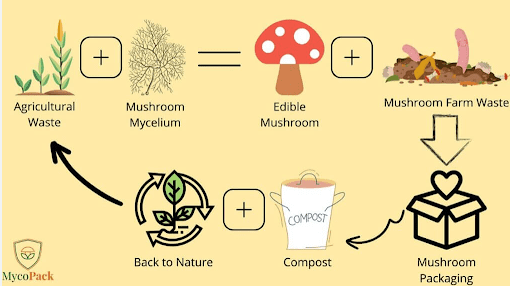
These packaging options are made of hemp-herd and mycelium of fungus. The fungus grows from the roots and works by growing into branches and forming a mass of fibers. The invention dates back to 2006, and in 2020, Swedish giant IKEA thought of using the product options and began manufacturing and shipping some of the products.
Why are they eco-friendly food packaging options?
- The packaging options are found to have high performance metrics.
- They offer a water-resistant option.
- The packaging can suitably decompose in a span of some weeks.
- Mushroom-based packaging offers a great insulation layer.
The product can be used to create cups, plastics, spice jars, and straws. They can also be used as sources of appropriate insulation if and where required.
6. Recycled PET plastics for the beverage industry
Image credit: Czarnikow
Beverages, including soft and hard drinks, were earlier packed in aluminium, cartons, glass, and even plastic. A total of 180 billion cans of soda and beer are used in a day, which is equal to 6700 cans every second. It accounts for the use of 1 million plastic bottles in a minute.
Currently, these beverage industries are transforming to the use of recycled PET plastics.
What makes them a good eco-friendly food packaging option?
- The plastic is 87% less heavy than glass bottles used as a preferred choice previously.
- Tight packing into cartons is possible due to the low weight and sleek shape convertibility options. They offer less loading time and use less packaging material.
- This plastic option can reduce emissions by half from industrial manufacturing and the packaging of bottles. They emit six times less carbon and lower the carbon footprint immensely.
- These PET plastics are 100% biodegradable in nature.
7. Sula Pac eco-friendly food packaging option

It is a patented plastic material and is an eco-friendly packaging option available.
Sula Pac has devised a solution for everything and works for cosmetics, food services (like straws, cutlery, kitchenware, and other products).
They also work as plastic for use in dry foods as well as supplements.
Why is Sula Pac important in serving as an eco-friendly packaging option?
- They are sustainable alternatives to plastic.
- It offers a microplastic reduction option and will greatly help in decreasing the problem of microplastics.
- They can be re-circulated back and reused again and again.
- Sula Pac has recently begun the take-back program and will provide a pilot project in this regard.
8. TIPA: Eco-friendly food packaging option

It was founded in 2010 and is an innovative food packaging option. They give us the following advantages over plastic as a suitable food packaging option.
- TIPA offers durability and transparency.
- They have a good sealable agent.
- It promises a high shelf life and provides printability options.
- TIPA can decompose in a span of 180 days.
- Their end-of-life is the same as any organic matter, and that way, it will work best for brands and organizations.
9. Repaq technology

It is another German technology where the plastic is made of 90% cellulose and 5% water. 4% glycerine and 1% binders.
They provide a variety of products, like stick packs, pouches, and flow packs, and a wide mix of options for sustainable, eco-friendly food packaging.
It is one of the most innovative products currently available and will serve as a wholesome food packaging option.
10. Paptic Packaging Options

The Finnish Brand is providing a good fight against plastic pollution and was founded in 2015. The three people behind this firm are Esa Torniainen, Karita Kinnunen-Raudaskoski, and Tuomas Mustonen. Paptic was first released on the market in 2018, and the material is extremely capable of giving tough competition to its plastic counterpart.
The material is especially known for the following properties:
- The raw materials are renewable, recyclable, and biodegradable.
- The material provides a highly printable surface, making it easy for people to get it printed.
- It is an innovative, sustainable, and multiple-use product to replace plastic.
The Paptic packaging options can serve as grocery bags and foodservice bags.
They would also serve as garment bags and gift-wrapping bags.
The bags they make can be used for packing consumer electronics, toys, and fashionable items.
11. Elopak and paperboard

A Norwegian company, Elopak, specializes in liquid food packaging options and works in the aseptic market.
Made of paperboard, Elopak cartons offer a renewable, sustainable resource option. Their Pure-Pak eSense carton is specially built with a polyolefin blend barrier, and they don’t use aluminium. They have, in fact, removed aluminium from their packages entirely.
It is still easy to use and goes without the aluminium layer. That way, it keeps the container fresh and aseptic.
12. Tetra Laval

The Swiss multinational company Tetra Laval uses 80% renewable electricity as per 2022 reports and has increased its photovoltaic capacity. By doing so, the company is successfully moving towards its goal of 100% renewable energy by 2030.
They are working towards making packaging a sustainable solution. They are improving the packaging and distribution metrics of the company by adding up to 100% of renewable resources.
13. Boxed Water

They are a green alternative to plastic bottles and are made of 75% paper with an aluminium lining. The brand has planted more than one million trees in the national forest. They work by planting trees in deforested areas as well as deserts.
What makes boxed water an eco-friendly food packaging option?
- The packets are 100% recyclable.
- They are free of BPA and phthalates.
- These packets are made from trees that are resourced from well-managed forests.
- The company uses only one truck instead of 26 trucks to transport these plastic bottles. The packets can be used to significantly pull down carbon footprints.
14. A New Earth’s Project

The New Earth Project is trying to replace single-use plastic packaging options with those that can be recycled again and again. They target recyclable products and want them to remain in solution to prevent them from polluting seas and lands unnecessarily.
They make padded mailers, paper mailers, Vela bags, paper labels, protective bumpers, and even insulation wraps. The company also brings out different kinds of carton boxes and even works around mushroom packaging. Each of these can be pulled together for repackaging options.
Conclusion
If you want to understand which brands and works can solve your quest to find the right eco-friendly food packaging option, we are here with a list of different options. Packaging materials created in a conservative style from eco-friendly materials can be costly, but with time and increased use, we can work towards reducing their pricing levels and options. Eco-friendly food packaging is a budding start-up sector, and it aims to change the face of packaging forever.
Read more about Kailash Mansarovar eco-packing options here.
Solar Energy Crisis (Choose between solar and biofuels) here.
Eco-friendly business ideas for students.
Green Indoor Plants for Houses [2024]

Green indoor plants for houses are the new shibboleth for the world. The reduction of carbon emissions is what concerns not just people but the entire world. The burden of keeping the temperature rise within 1.5–2 degrees Celsius is a target the world is trying to focus on.
It means almost 30%-40% of the carbon dioxide load needs to come down. What can a normal human living a normal life do in these circumstances?
Merely contributing to the process of reducing the carbon load is what we all need to collectively target.
One easy way to achieve it is to use green plants for houses.
There are currently 418030 green buildings around the world. The hotspot areas where green buildings are being prioritized and promoted include these areas.
| Cities promoting the green building concept | Number of thriving green buildings |
| Washington, DC | One billion square meters of space |
| Los Angeles | 1200 buildings |
| Houston | 1000 estates |
| Paris | 600 real estate properties (including the 44-floor Majunga tower) |
| Abu Dhabi | 22,540 buildings |
| New York | 100 properties |
| Chicago | 3400 buildings have utilized energy data |
| London | 3000 green buildings |
| Stockholm | 2000 properties |
| Dubai | 1500 properties |
| Singapore | 2000 green rated properties |
| Beijing | 480 construction properties |
| Shanghai | 6160 properties |
| Melbourne | 395 homes |
| Sydney | 3550 construction units |

In this article, we will discuss what plants can serve as indoor plants and why.
Why should you have more green plants around you?
Green indoor plants can benefit you in many ways, and the chief ways they can help our survival as well as the survival of the planet are given here.
1. The green indoor plants reduce stress factors and levels
The green indoor plants will work on your sympathetic nervous system to reduce stress levels. According to studies, they also reduce the diastolic blood pressure level. The nature’s touch and the coolness that they offer to homes can significantly improve your mood, thereby reducing the stress levels immensely.
2. Improved immunity
According to Ayurvedic sciences, there are many green indoor plants that collectively help improve an individual’s immunity levels.
Spider plants, snake plants, chrysanthemum, and dracaenas are the plants that help improve immunity. It means it can improve allergies, asthma, and overall wellbeing. Some studies have revealed their usefulness as green indoor plants.
| Plants | How do they benefit |
| Chrysanthemums | They remove benzene from homes. |
| Dracaenas | Remove dust and mites and improve asthma and allergy symptoms. |
| Spider Plants | It scrubs off carbon monoxide, benzene, and formaldehyde from the air. |
| Aloe Vera | Great for improving the air quality. |
| Snake Plants | They reduce formaldehyde levels in the air |
3. Air cleaning qualities for homes
As per a study initiated by NASA, Epipremnum and Spathiphyllum are plants that help clean the air in homes. These green indoor plants can keep your home clean and dust-free.
4. Cigarette smoke combatant
The peace lily plant, also known as Spathiphyllum, is a good choice for those who smoke at home. You can naturally get rid of cigarette smoke pollution and odors using these plants.
5. Reduce noise pollution within homes
Common ivy can reduce the noise level in your home by 60%.
Boston fern can decrease noise levels in indoor environments quite competently.
Use them whenever you feel your home noise level is higher due to the ongoing outside traffic. Make your home calmer by using these green plants for homes.
6. Generation of good oxygen levels
Plants that absorb carbon dioxide during the day and release oxygen at night are the best-suited green plants for homes and bedrooms.
Lavender, daisy, spider and snake plants, jasmine, and aloe vera are some of the common plants that produce oxygen at night.
7. Green indoor plants can reduce headaches.
If formaldehyde, benzene, and trichlorethylene are removed from the air, it can reduce the chances of having a headache at home. Plants that can reduce these impurity levels work towards this interest. Leathermaking and carpet production add to the formaldehyde in the air. If your house happens to be near such a plant, you will need to place plants that can clean the air in your house. Use plenty of green plants in your house, and your home will always be a place you’d want to return to.
How can green plants reduce the carbon load?
Green plants reduce the carbon load by using carbon dioxide to produce their food through the process of photosynthesis.
Along with soil sequestration, they almost reduce one-third of carbon dioxide emissions.
Tiny pores called stomata are open to suck in carbon dioxide for food production.
Berkeley Labs coordinated with AmeriFlex to build 500 micrometeorological towers in forests and different ecosystems to study the exchange of greenhouse gases.
What are the types of green plants for your home?
Next, we will see the various types of green indoor plants for homes that can clean the air and make your homes more liveable than ever.
1. Types of green plants indoors
Here are a few green indoor plants that can add to the benefit in your homes.

- Plant name: Philodendron
Specialty of the plant as an indoor plant: Removes formaldehyde & xylene (found in leather and glue items) from the air.
How do you care for them: They need a lot of sunlight and water, alongwith fertilizers.
- Name of plant: Spider Plant
Specialty of the plant as an indoor plant: Removes carbon monoxide and xylene.
How do you care for them: Regular pruning is needed to keep control over the spiderettes.
- Plant name: Snake Plant
Specialty of the plant as an indoor plant: Removes formaldehyde, xylene, benzene, toluene and trichloroethylene.
How do you care for them: Overwatering is not allowed, as a moist soil can tend to rot their roots.
- Name of plant: Croton
Specialty of the plant as an indoor plant: Filters air toxin sources
How do you care for them: Keep the plant watered and humid but do not overwater.
- Plant Name: Heartleaf Philodendron
Specialty of the plant as an indoor plant: They capture carbon dioxide and other toxic pollutants. These plants are toxic for pets and children.
How do you care for them: Add partial sunlight for optimal plant growth and grow them in well-drained soil.
2. Types of hanging green indoor plants
Hanging green indoor plants can be an option for small homes.

- Plant Name: String of Pearls
Specialty of the plant as an indoor plant: They remove indoor air pollutants. These plants help fight bacteria.
How do you care for them: Keep them light and moist in summer and borderline dry in winter.
- Plant Name: Pothos
Specialty of the plant as an indoor plant: It helps keep the air clean.
How do you care for them: Grows in humid and bright corners well and need water only when the soil gets drier.
More of these green indoor plants
- Plant Name: Peperomia
Specialty of the plant as an indoor plant:
- They help remove formaldehyde (which can reduce it by up to 47%, as per a study by Wolverton’s Clean Air) and ammonia from the room air.
- The plant also provides a huge amount of oxygen.
- Alleviating dust, and mold from the air is a specialty of these plants.
- Allergic patients can benefit hugely from them.
How do you care for them: Low-maintenance plants, they can withstand neglect and are perfect for forgetful or busy owners.
- Plant Name: Hendera Helix
Specialty of the plant as an indoor plant:
- Removes benzene, xylene, carbon monoxide, formaldehyde, toluene, trichloroethylene from the air.
- The plant has anti-inflammatory and antioxidant properties.
- These plants improve the respiration of beings.
- They are harmful for pets.
- They can prevent the decay of the walls on which they grow.
- They act as particle sinks and work best in highly polluted areas.
How do you care for them: It is a low-maintenance plant and has evergreen leaves even when the owners do not water the plant for long.
- Plant Name: Staghorn fern
Specialty of the plant as an indoor plant: They remove toxins like formaldehyde, xylene, and toluene from your indoor air.
How do you care for them: You would need to spray on these plants. You must allow almost drying conditions before you plan to water again.
3. Green indoor plants with red and green leaves
Red and green is a combination that suits many homes.

- Plant Name: Dragon tree
Specialty of the plant as an indoor plant: Removes Trichloroethylene and xylene.
How do you care for them: Needs a high ceiling and plenty of sunlight to grow as they can grow as tall as 8 feet.
- Plant Name: Red Earth Star
Specialty of the plant as an indoor plant:
- The plant is good for areas that emit radiation, as it absorbs radiation instantly.
- They remove volatile organic compounds (VOCs), also known to contribute to cancer.
How do you care for them:
Water sparingly and put them in indirect sunlight or in mild shades.
- Plant Name: Begonia
Specialty of the plant as an indoor plant:
- The plant can absorb dust.
- They can kill microbes and fungi.
- An increase in humidity is what the plant can contribute to.
- They can filter out benzene and any chemicals produced from toluene.
How do you care for them:
A lot of sunlight is necessary for the plant which can grow in the garden environment easily.
- Plant Name: Maranta (Prayer Plants)
Specialty of the plant as an indoor plant:
- Prayer plants, as per a study, can absorb 71.67 parts per million (PPM) of carbon dioxide within a closed room where the light intensity is 300 to 700 Lux.
- They help remove toxins like formaldehyde and benzene.
How do you care for them:
They grow well in bright, indirect light and also in shade. These plants cannot tolerate droughts.
4. Green indoor plant with purple and green leaves
Purple is a regal color and many people love to have plants tinged or full of it.

- Plant Name: Wandering Jew Plant
Specialty of the plant as an indoor plant: They remove xylene and formaldehyde from your home. Place them in your home’s well-lit areas, and you will be able to feel cleaner air.
How do you care for them: The plant is low-maintenance and non-toxic to pets.
- Plant Name: Inch plant (Tradescantia zebrina)
Specialty of the plant as an indoor plant:
- They remove toxins and volatile air compounds easily.
- They can grow upto an inch per day.
How do you care for them:
They need little maintenance, require humid conditions for growth, and are most ideal for bathrooms.
- Plant Name: Rose-Painted Calathea
Specialty of the plant as an indoor plant: Helps filter out a lot of compounds that spoil the air in the room.
How do you care for them: They must be in warm and bright spots of your home but do not place them under direct sunlight.
- Plant Name: Oxalis
Specialty of the plant as an indoor plant:
- They have a unique association with the genus Bacillus and fix nitrogen they collect from the circulating air.
- The edible leaves will cool down in high-temperature conditions.
- The plants remove air pollutants and filter your air.
How do you care for them:
They require a humid environment and need water every once or twice a week.
- Plant Name: Persian Shield
Specialty of the plant as an indoor plant:
They help to remove toxins from the air.
How do you care for them:
They are drought resistant plants and need 0.8 cups of water every 9 days. They must be kept away from direct sunlight.
5. Evergreen houseplants as green indoor plants
Evergreen plants are great options for people who love to be surrounded by greenery.

- Plant Name: Jade Plant
Specialty of the plant as an indoor plant:
- They clean the air by absorping toluene from the atmosphere making the air breathable.
- The plant also absorbs carbon monoxide from the air.
- The Jade Plant captures dust as well as bacteria from the atmosphere easily.
How do you care for them: They are perennial plants and require infrequent maintenance.
- Plant Name: Rubber Plant
Specialty of the plant as an indoor plant:
- They act as natural humidifiers in your home.
- They can be placed on the windowsill where they can clean the air. They remove xylene, benzene, and trichloroethylene from the air.
How do you care for them: Low light plants are toxic for pets.
- Plant Name: Dieffenbachia
Specialty of the plant as an indoor plant:
- Dieffenbachia can filter out volatile organic compounds from the atmosphere.
- They can also absorb CO2 from the air quickly and efficiently.
- With a high transpiration rate of 7, they help maintain humidity in the air.
How do you care for them:
They can simply grow in water and you don’t need much soil to grow them.
- Plant Name: Grape Ivy
Specialty of the plant as an indoor plant: Grasps toxins
How do you care for them: They require a regular supply of moisture so do not overwater them.
- Plant Name: Norfolk Island Pine
Specialty of the plant as an indoor plant: They remove volatile air compounds easily from air. Most often, VOCs arise from dry-cleaned clothes, paints, glue, and even permanent markers.
How do you care for them: You must keep the air humid and have a slow growth rate making it an excellent container plant.
6. Green foliage house plants/ Indoor foliage plants
Green foliage house plants make great indoor foliage plants for greenhouse plant type homes.

- Plant Name: Monstera
Specialty of the plant as an indoor plant: Remove formaldehyde, benzene, and trichloroethylene from the air.
How do you care for them: Place them in brighter spots, but not in direct sunlight. Wipe the leaves regularly, and keep a moss pole close to the plant to allow them to grow well.
- Plant Name: ZZ Plant
Specialty of the plant as an indoor plant: Native to Africa, these plants can filter out formaldehyde, xylene, benzene, toluene, carbon dioxide, paint and resin volatile air compounds and also xylene from indoor plants.
How do you care for them: They are drought-resistant and require minimal care.
- Plant Name: Parlor Palm, a green indoor plant
Specialty of the plant as an indoor plant: They remove formaldehyde, carbon monoxide and benzene from the air.
They will add a lot of oxygen to the air.
How do you care for them: It is also a low-maintenance plant and requires little care.
- Plant Name: Fiddle Leaf Fig
Specialty of the plant as an indoor plant:
- It will help remove ammonia, benzene and formaldehyde from the air.
- They also improve the oxygen content of the air.
How do you care for them: They need warmth, humidity, indirect and bright light, and a lot of water. They are water-loving plants and require a bit of direct sunlight.
- Plant Name: Nerve Plant
Specialty of the plant as an indoor plant: They remove toluene from the air and also a lot of carbon dioxide from the atmosphere.
How do you care for them: Give them bright, indirect sunlight, and a highly humid environment. They grow well within 60- and 70-degree Fahrenheit.
Conclusion
Removal of particulate matter and volatile organic compounds from the air can make the air more breathable and normal. If you want to increase your in-house air quality, you should try planting a lot of green indoor plants.
Plant them in shafts across your home walls to prevent the sun from damaging the walls and also improve the coolness within your home. These few different green plants for your house will add value and improve your life’s quality immensely.
Green foliage house plants and hanging green plants indoors are a good way to keep your home clean.
Try these plants, and you will not be able to avoid the smile across the corner of your lips.
Mathematical correlation of Kali Yuga, Other Yugas and Time

We are so much into the Kali Yuga (the fourth phase of the world’s fate) that we often end up thinking that the Rig Veda was a newspaper from earlier times. If it was, as I have heard people joke around, then they, if reading this, must also admit what a wonderful newspaper it must have been.
All the yugas in order would go as given here: Satya Yuga, Treta Yuga, Dwapar Yuga, and Kali Yuga.
How did our ancient seers identify and calculate time so accurately?
How are they even so accurate?
Let’s have a look!
- Satya Yuga: 1.728 million years
- Treta Yuga: 1.296 million years
- Dwapara Yuga: 0.864 million years
- Kali Yuga: 0.432 million years
If you know that time runs parallelly, then you know that there are a total of 1.728 million years.
Now check this part.
- 432 million years x 4 = 1.728 million years.
- 432 million years x 3 = 1.296 million years
- 432 million years x 2 = 0.864 million years.
- 432 million years x 1 = 0.432 million years.
There is a parallel timeline divided into 0.432 million Earth years. Everything is happening now. The only thing that’s varying as per the timeline is the energy distribution through the parallel tracks, and where we are resurrecting the Ram Mandir in one direction, we are actually welcoming Shri Ram after he defeated Raavan and came back to Ayodhya.
Now check this part.
- 728 – 1.296 = 0.432 million years.
- 296 – 0.864 = 0.432 million years.
- 864 minus 0.432 = 0.432 million years.
It means there is a time gap of 0.432 million years after every Yuga, and these numbers denote the chaos between the end of one Yuga and the beginning of another.
This would also mean there is a Kali Yuga after every Yuga.
It depicts the chaotic period between two yugas when a certain kind of being is given the power to rule.
How they rule is measured by their power to restore order.
If man could do better with these 0.432 million years, they would have secured a place at a certain angle on Earth—a better one. But that does not mean all hope is lost.
If you have read LOTR, you must be aware of the haven, which is nothing but the 25-degree world from our world (which also has a calculation). We are this close to them, yet we are far away. Hence, Sai says we only have to remember them truly, from our hearts.
0.432 million years is a time span that also shows something else.
1. Shrinking of time from Satya Yuga to Kali Yuga
The theory of time shrinking says that when 0.432 x 4 million years exist, we get to see an expanded timeline. We also see people who live longer, are built differently, and have a very different kind of disposition.
Whereas for one living in the Kali Yuga, we have less time. We have more problems, and our life expectancy is way too low.
With time shrinking, we feel as though time is moving too fast, and it’s difficult to keep pace.
2. Expansion of time from the other side of the funnel
We also envision time expansion and the concept around it, mostly with each Yuga being smaller by a single multiple of a million years.
With time expansion in practice, people in Satya Yuga must have felt like time had stopped completely.
But does time compress alone?
No, mostly time expands and compresses with space. Ideally, it is always time-space compression or time-space expansion.
What do we learn from this Kali Yuga about all the yugas in order?
We learn a few fundamental aspects of this Kali Yuga.
- Space and time are not constants but variables, which means space and time do not just keep expanding or compressing. They expand and contract like a wave, making a crest and trough.
- Space and time are the x and y variables of an unknown chart, and our dimensional attributes (viz., length, breadth, and height) fit inside it.
- If you note that Satya Yuga = time, then all the other three yugas are nothing but the dimensional attributes.
- In such a case, we would like to take the example of the Pyramids of Giza, Egypt, into consideration for further explanation.
- Height: 481.4 feet
- Base length: 756.4 feet
It shows the length is twice the height. When extrapolated to incorporate the same law towards the Yugas, we can notice these findings:
Time: Satya Yuga = 1.728 units
Length: Treta Yuga = 1.296 units.
Height: Kali Yuga = 0.432 units.
Width: Dwapar Yuga: 0.864 units (twice the height)
Ideally, (1.728 – (1.296 + 0.432)) = 0.
What remains is the total value of 0.
The net of all 3 Yugas is ideally 0, as each balances the other.
The value that remains in this equation is 0.864 units.
Again, (0.864 + 0.432) units together will amount to 1.296 units (nothing but the value of Treta Yuga).
The net total of all these numbers (1.728 + 1.296 + 0.864 + 0.432) is 4.32 units.
It is nothing but ten times the number of 0.432 units.
Here is an interesting finding:
0.864 + 0.432 = 1.296 units.
1.296 +0.432 = 1.728 units
However, 1.728 is not equal to all the other three available units.
The number that stands out in all is 0.432 unit.
Even,
1.728 (1+7+2+8) numerologically equals to 18 that is equal to 9.
1.296 (1+2+9+6) is equal to 18 which is equal to 9.
0.864 is equal to 18 that is equivalent to 9 and so is 0.432 equal to 9.
Numerologically, 4+3+2 = 9.
Concluding observations
- Even 108 equals 9.
- We see that each Yuga is as though concentrated within another, and Dwapar Yuga and Kali Yuga are built together inside the Treta Yuga.
- Treta Yuga is split into Dwapar Yuga and Kali Yuga.
- We find the concepts of space-time expansion and time compression working very well within the Yugas. Compression and rarefaction are general attributes of a longitudinal wave.
- Time and space are not constant but rather fluidic or waveform in nature.
- Time and space bind our three-dimensional attributes—length, breadth, and height.
The only question that we must think about next is: why do we come back to 9? What is so significant about this number?
Green packing for Kailash Mansarovar yatra

We earn from affiliate links. If you click my site links for the products we will be able to earn a bit.
Kailash Mansarovar Yatra is one of a kind and can bring people to what they are searching for always. Find what you need for the travel and also understand how much you have to spend for them.
Kailash Mansarovar Yatra is one of those few journeys several religious group believers wish to take once in their lifetime.
Which are those groups that want to take a trip to Kailash Mansarovar?
- Hindus
- Buddhists, including Tibetans
- Jains
- Bon community people
Why is the Kailash Mansarovar sacred for these religious groups?
- Millions of Hindus believe in Lord Shiva, and Kailash Mansarovar is the abode of Shiva.
- Buddhists, especially Tibetan Buddhists, believe it to be the dwelling place of Demchog (Chakrasamvara).
- Jains visit Kailash Mansarovar as their belief is in Kailash (known to them as Ashtapada), which is the place of Rishabhadeva, the creator who got liberated from the cycle of birth and death.
- For the Bon community, Kailash is home to their beliefs and faiths. Interestingly, they call it a nine-story Swastika Mountain. Bonismo was the national religion of the Shangshung Dynasty near Mount Kailash. According to theories, the founder of the Bon religion, Sinwan Mivo, was born in the foothills of Kailash.
If you have to decipher what Mount Kailash is, then some would prefer believing that it is the mountain used by the gods and the demons during Samudra Manthan. The Sumera Parvat is what the mountains are known as.
Hindus, Jains, and Buddhists circumambulate clockwise, and Bons circumambulate anti-clockwise.
When going for the Kailash Mansarovar Yatra, what or how can you use green packing to keep your load lighter on the mountain waysides? Why green packing is the choice for today? There is a steep rise in global temperature and only reducing carbon footprint while carrying out our daily activities is the only option.
The Kailash Mansarovar Yatra is one of a lifetime option for many. The Tibetans do make a round every year or two and they also travel differently. The Kailash Kora is a different experience for these hardy, mountainous people. But it is not the same for people from the plains. A few must-haves for travel would include the ones given below and at least this much needs to go with you.
The main travel restriction for Indians is fitness and money. Most people would be able to take it if they can have cheaper options. With Indian routes opening, the journey might expectedly become cheaper but still you’d need a lot of planning and saving.
I haven’t been able to make it still but if I have the money and the fitness, I may but I may not, and it all depends on Lord Shivay as our beliefs go.
Try eco-friendly packing options as they can make your life easier and so can they help the mountains.
Here are the green packing alternatives to carry on the Kailash Mansarovar trip.
List of green packing items for your Kailash Mansarovar Yatra
Here is a list of items that can be green packing options when going for travel packing for the Kailash Mansarovar Yatra.
Don’t forget the tents and they must be your decision if you need them. If you need them find more about them as per your budget. Tents can be cheap or pricey based on their available functions.
Also, try endorsing a smart ring to ensure you have every minute record of your condition. Know and rectify accordingly by training yourself in high terrain living.
1. Backpack

Image credit: discoversalkan
The first thing you need is a backpack, and a green packing option would be the Pangolin backpack and the Dugong backpack. These are the best travel backpacks and are absolutely eco-friendly in nature.
Price: ₹4,500.00
Dugong Backpack: It is made of natural canvas,
handcrafted by Kolkata artisans,
and with each product sale, the company plants five trees with the money they earn from it.
Pangolin Backpack: It has 12 features and comes with a separate section for the shoes. A theft-free back pocket and gear for carrying extra luggage. Inner zipped pockets for extra essentials and has a 20–27-liter capacity. It has a laptop section, and it can be simultaneously rolled and unrolled. Compartments are good enough for a single backpacker. The bag comes in zero-waste upcycled packaging boxes and is the best water-resistant backpack with sturdy metal fittings. It is sustainable and offers reuse options for a long time.
Salkan Backpack: Best travel backpack
Waterproof, recycled, adjustable back, flight and rain cover options. It is also one of the best travel backpacks for women.
Price: Rs. 31,600.00
Refer to this Amazon link for economic solutions to backpacks.
2. Sleeping bags

Price: $250.00 to $280.00
Temperature maintenance: Even at 15F/-90C
Those who cannot afford a room or love sleeping outdoors can use the sleeping bags. Even those sleeping on floors while traveling can use the sleeping bags.
The Lamina Eco AF sleeping bag is made from recycled fabric and is undyed on the inside.
They have trimming pockets, and with recycled nylon or polyester, they are RDS certified.
They also have a repair program and can be reached at a given email address.
Economic solutions for sleeping bags
3. Hiking boots

Try a pair of hiking boots and carry another surplus one in case you lose one in the snow.
The sole is made of recycled rubber, and it is absolutely water-resistant.
They are cork lace-up boots and can work wonders when traveling in snowy terrain.
Reparable, durable, ventilation-provisioning, and shape-retaining boots are known for their strength and durability.
By the mountain boots/Alpinism Blue and socks can save your feet from the blizzard.
Deal of the day with Amazon.
4. Toileteries

These are what you need to carry with you when traveling, and this is a list of eco-friendly products.
- A bamboo toothbrush with a traveling case is easy and good for use.
- Cream deodorant for a shower-free day and a refreshing journey.
- A shampoo bar made of organic ingredients.
- Razors of your choice
- A comb is for all journeys, and a bamboo comb works best.
- A soap
- A liquid hand sanitizer
- A liquid soap
- Face toner
- Menstrual cups
- long-lasting toiletry bags
- Wet napkins
- Tissue paper
- Woollen caps
- Nail clippers
- Rubber bands
- A needle and a thread spool
- Handkerchiefs and small towels
Find the link to the activated charcoal bamboo toothbrush.
5. Head lamps and torches

A head lamp is a must, as it can help you travel through dark and rough roads.
Try Silva’s Terra Scout lamps, and the plastic in them is recycled. Durable and light, they can help you emit 90% less carbon dioxide than conventional plastic materials.
Head lamps for a cheaper rate
6. Trekking trousers

Trekking trousers need to have fewer pockets but be sleek and tight in appearance. Multiple-layered trousers can be beneficial in the changing weather of Kailash Mansarovar.
Apart from that, have good trekking T-shirts, fleece jackets, and hiking shorts with you, as well as some good pairs of brassieres.
A single winter jacket can help, along with an outer, insulating, water-proof layer.
Ski trousers can save you from the rain and the mist, as they are warm, insulating, and waterproof devices.
You can get all green and sustainable brands for all of these.
Also, if you are carrying them in plastics, try the biodegradable plastics so that they degrade and do not cause an issue of any sort when left behind.
Find the pants for your trek here– All women click the link.
For men, click the link here.
7. Inner and outer gloves/mitts

Choose fleece gloves as your inner layer, as they can not only keep you warm but also provide you with adequate space to move your fingers.
Mitts offer great warmth, yet fingered gloves can help your dexterity.
8. Water purification tablets

While on the Kailash Mansarovar Yatra, try carrying water purification tablets with you. Also, carry bottled water with you everywhere since the higher you rise, the more sips you need to keep the dehydration away.
9. Rehydration sachets

Rehydration sachets are a good option to have with you, as once in a while, taking a sip from them can help your journey immensely.
10. Over-the-counter medicines to carry

Carry these with you to avoid unnecessary doctor visits.
- Antiseptic cream’
- Band aids
- Plasters
- Blister plasters
- Hypodermic needles and zinc oxide tapes
- Painkillers that don’t make you sleepy
- Anti-nausea and anti-diarrhea medicines
- Anti-constipation medicine
- Allergy medicines
- Petroleum jelly
- Good throat lozenges
- Multivitamins
Conclusion
Visiting or going for the Kailash Mansarovar Yatra is not easy, as not everyone is making it. But when you think or decide to take up the journey, follow the list and put everything in. Most of you might have many other requirements, but basically, carrying these products and following this list is going to take you safely to Kailash Mansarovar. Additionally, you are taking care that your Kailash Mansarovar Yatra is in sync with green packing.
Try the road via Sikkim or via Uttarakhand.
Lord Shiva’s abode and the faith of millions of people can only be attained when you travel safely and have a tale to come back and share with others.
 TheScientificTriangle
You must be logged in to post a comment.